Click here to buy the book on Amazon.
Available in paperback and Kindle edition!
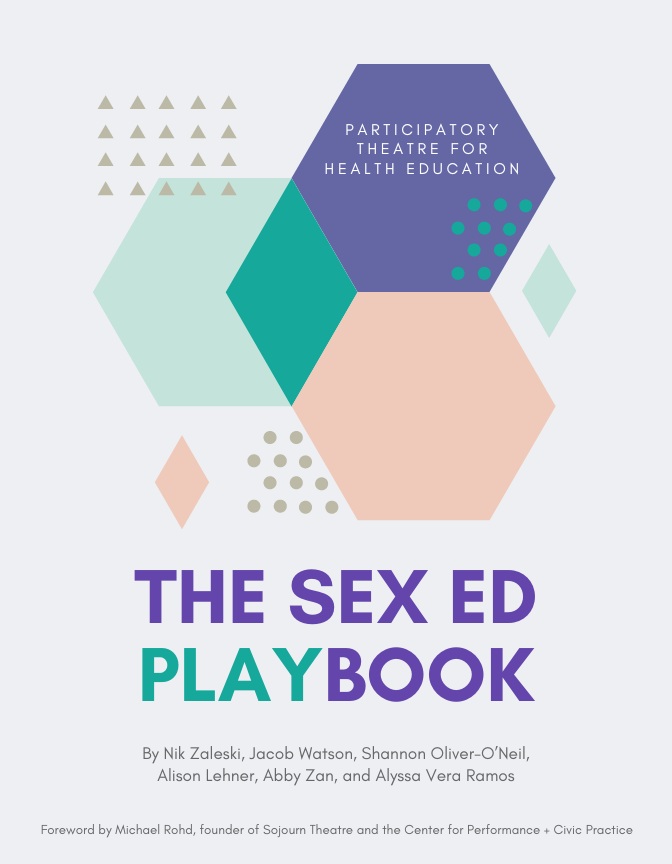
The Sex Ed Playbook
Participatory Theatre for Health Education
The playbook articulates the need for innovative, arts-based strategies in sexuality education and positions participatory theatre as a tool for cultivating empowering, inclusive, and imaginative learning environments. This book is both a theoretical model and a practical guide: we outline vital context and best practices in participatory theatre, as well as over 40 different activities for use in educational and community contexts.
Your guide to shame-free sex ed
Ideal for sex educators, youth workers and teaching artists looking to support young people’s sexual health in group contexts.
About The Playbook
The Playbook begins by outlining the need for creativity in sexuality education.
It describes the damaging ways that shame makes its way into sex ed learning environments, and positions participatory theater techniques as an antidote. The introductory chapter outlines the playbook’s core framework: ‘The 4 Ps’ of participatory theater (pleasure, perspective, practice, and power). Each chapter then introduces one of the core practices of shame-free sex ed, along with a set of activities you can try out right away!

1. Build Community
At the start of a process, participants often doubt whether they will find compassion and support for their questions and beliefs from others in the group. By utilizing community-building activities, the facilitator creates a safe space rooted in curiosity and respect.

2. Share a Story
Stories bring personal relevance to abstract information and ideas. They help us to forge meaningful connections with others around important topics. Sharing stories about sex and sexuality can help young people feel less alone in the world. Exercises in this chapter will help young people realize that others might understand where they are coming from, might have been in their shoes before, and might even have an idea about how they can move forward.

3.Move Your Body
Too much time in our nation’s classrooms is spent sitting at desks, facing a whiteboard, or a teacher at the front of a room. What happens when everyone gets out of their seats? How does an educator host a space where students are making connections and processing in new, “on-our-feet” ways? Activities in this chapter explore those questions.

4. Act it Out
Young people need a safe space to practice acting out what might be, and they need permission to get it wrong a few times. Acting out imaginary scenarios helps young people gain realistic language and practical tools that will be useful in real life. Exercises in this chapter support youth in trying on language and possibilities for conflict resolution, because the ethos is ripe for “failure” to be safe.
About the Authors





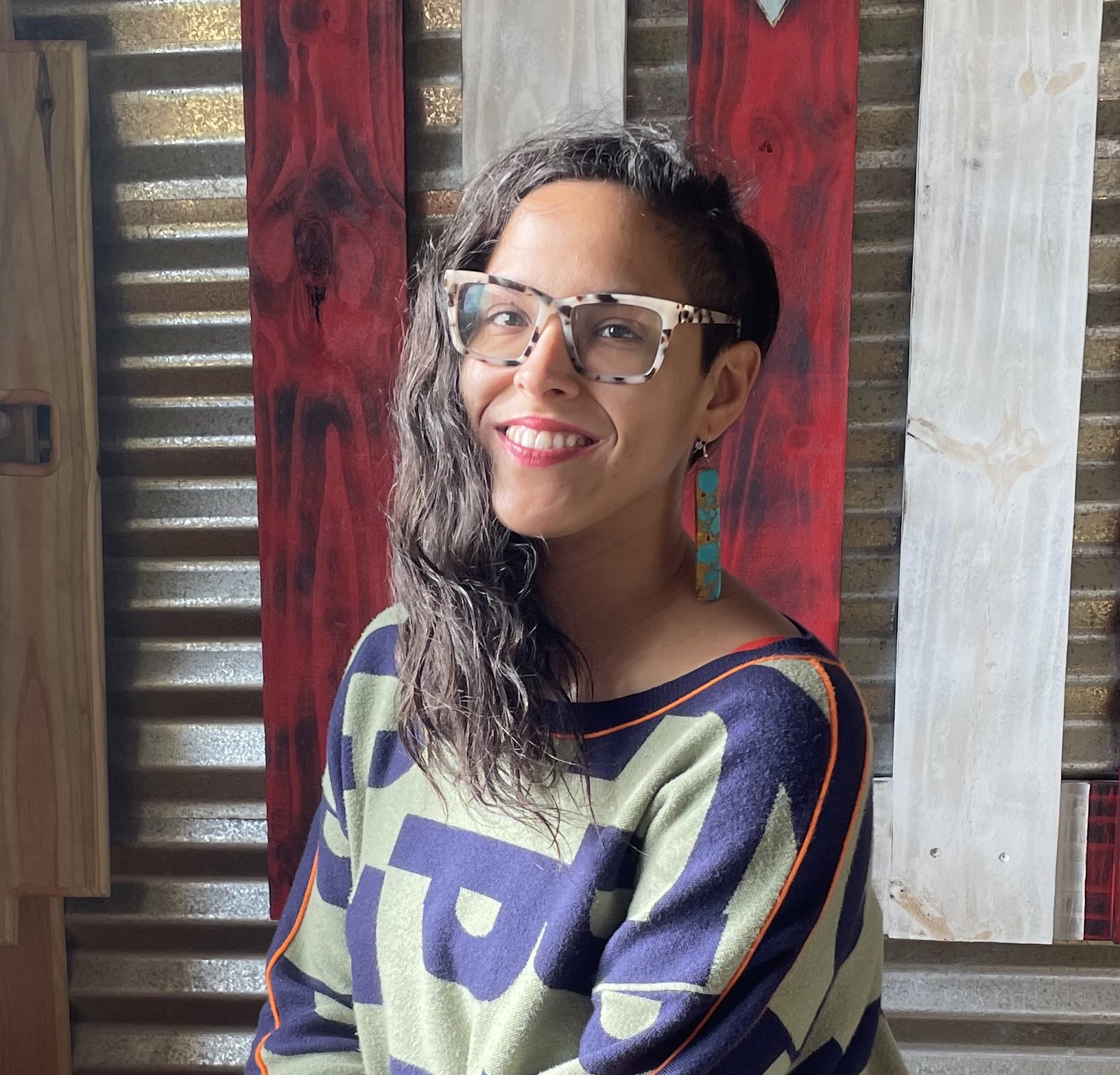
We are a group of artists, educators and activists who worked closely from 2008-2014 in Chicago developing theatre frameworks to improve sexual health practices.
We founded and worked under the organization, For Youth Inquiry (FYI): Performing Health Collective, with the mission to design participatory theatre experiences that activate the creative potential of health education. In 2014 FYI became a program of the Illinois Caucus for Adolescent Health (ICAH), an organization that educates and organizes for reproductive justice for youth in the state of Illinois. ICAH has a robust history of utilizing creative approaches to improve adolescent health, and is now infused with FYI's participatory theatrical practice. To learn more about the ongoing work that ICAH does in the reproductive justice movement, visit www.icah.org.
Throughout this playbook, we also draw from our individual experiences working with youth in theatre and health spaces as teaching artists, educators, activists, and advocates. We incorporate best practices from our collective work under FYI and years of bringing innovative cultural and theatre practice to the field of sexual health education. The authorship of this book intentionally mirrors our collaborative working style. Though the book features individual author perspectives at points, it is largely written with our collective voice at the helm.