Read, Write, Achieve!
At SpiderSmart, students become confident thinkers and learners.


Ready for a New School Year?
Pens, textbooks, backpacks, and empathy.
August | 2022The first day of school is a powerful experience for students, parents, and teachers. It can be scary or thrilling (or probably both). Whether your child is anxious because the school is new and unknown or your child is excited to see friends and meet a new teacher, most students experience strong emotions dealing with a new school year.
First, know that for younger elementary school students, there is often hesitation over having a new teacher. Remind your children they know the school layout, they have friends there, and they probably know some of the supporting staff. Familiar faces await them for a new year!
If the school is completely new, then the most important factor is this: orientation. School’s offer orientation sessions, and even if you miss the official one, most schools will work with new students and their families. Just contact the main office and faculty members will work with you to make a new student comfortable and confident on that first day.
The move from elementary to middle school is a large leap and full of new rules, procedures, and expectations. Lockers and home rooms and hurrying from one side of the school to another to get to a class on time are all stressful. Practice with combination locks before school starts. Study a map of the school. Guide your child mentally through this new routine. After a few short weeks, middle school will become a habit–and so much better than elementary school.
Of course, the jump to high school is huge, but last year’s 8th grader will be familiar with the basics of high school before arriving on day one. The student knows lockers and schedules and crowded hallways and loud lunches. It’s familiar territory for them even if it is intimidating.
Most teachers and counselors agree the best thing a parent can do is listen.
Let your child express fears and worries and hopes. Once your child lets all those feelings free, you can calmly go over the concerns, one at a time, and offer support. Let the child know help is there and everyone wants students to succeed.
If homework and responsibilities are overwhelming, then school staff, parents, tutors, and learning centers like SpiderSmart can be relied on to boost your child to new levels of achievement!

One Chapter Ends—and a New One Begins
Wishing our newsletter maestro a fond adieu
August | 2022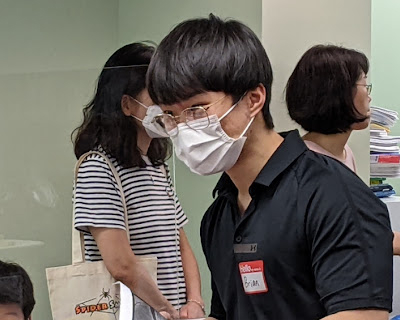
With this issue of the newsletter, we say goodbye to the curator and write of the newsletter from our very first issue last June, Brian Kim. Brian earned his master’s degree in teaching from the University of Virginia this spring and has now joined his wife in Beijing to start the next stage of his adventure in education. I expect that in a few years, we’ll be referring to Brian as Dr. Kim.
Brian not only was the mind and muscle the newsletter, but he also was a phenomenal tutor. He made deep connections not just with his SpiderSmart students but also with their parents. It was cool the past few years to watch Brian grow as a tutor and mature as a scholar who believes passionately in the power of education.
Good luck, Brian! We’ll miss you (but you’ll always be part of the SpiderSmart family).
Next issue we’ll introduce you to the next writer and curator of the newsletter, somebody whose name many of you will recognize.

How to Maximize Summer Vacation
No more tests! School’s out!
July | 2022Students around the world, especially during the summer, often wonder, “What am I going to do with all this free time?” Of course summer is meant for fun things such as playing games, watching movies, and hanging out with friends, but we also need to think of productive things to do during the summer as well.
We’ve compiled this list of seven productive things you can do during summer vacation:
-
Reflect on the semester
- It doesn’t have to be done formally on paper (feel free to draw or map out your brain).
- Answer these three questions:
- What did I do well during this semester?
- What did I not do so well in the past semester?
- What will I do differently in the coming semester?
-
Watch educational YouTube videos
- We know you have your favorite YouTubers out there, but you should also try to watch educational videos as well (e.g., TED talks, BrainPop, National Geographic)!
-
Learn a new language
- With the plethora of social media and websites out there, you can try to pick up a new language over the summer!
-
Volunteer
- Giving back and working to improve your community can be very meaningful. Volunteer to help out at a nursing home or an animal shelter!
-
Achieve an athletic goal
- Try doing five pull-ups in the morning and night.
- Try doing 20 push-ups a day.
- Try to run a mile in under 10 minutes.
- Try to hold a plank for a minute.
-
Enjoy the great outdoors
- Go for a hike, have a picnic, or go out to a lake! Have fun being active.
-
Improve your reading and writing skills
- Summer is a great time to expand your vocabulary and practice writing.
- Come up with a list of 5 to 10 books you want to read over the summer and keep a reading journal.
Tysons Center Celebrates the End of the School Year
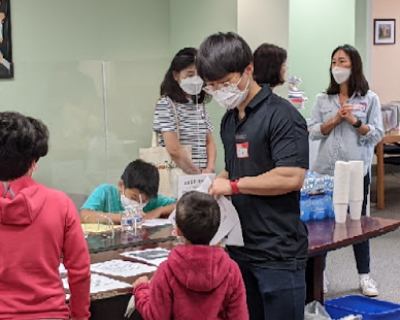
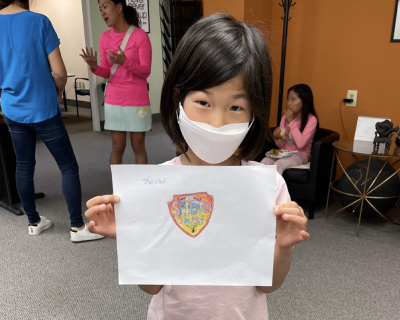
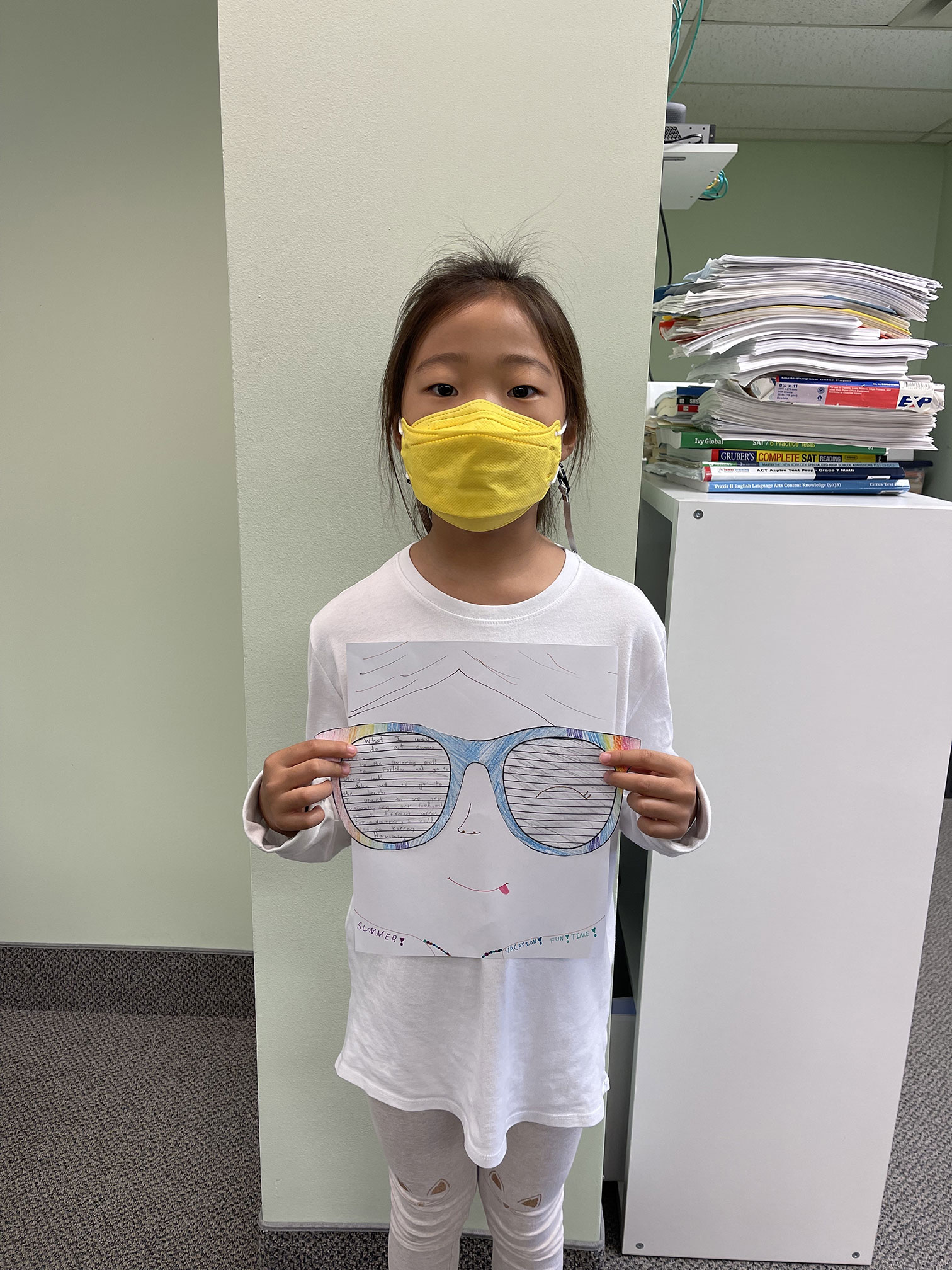
July | 2022We want to thank all of you for making the end of the year celebration possible! So many of our SpiderSmart friends and families were able to join us on June 11 for our celebration at Tysons Center.The Fun Fest featured fun games, arts and crafts, info sessions on our wonderful programs, and so much food!
Here are some pictures of our first successful end of the year celebration:


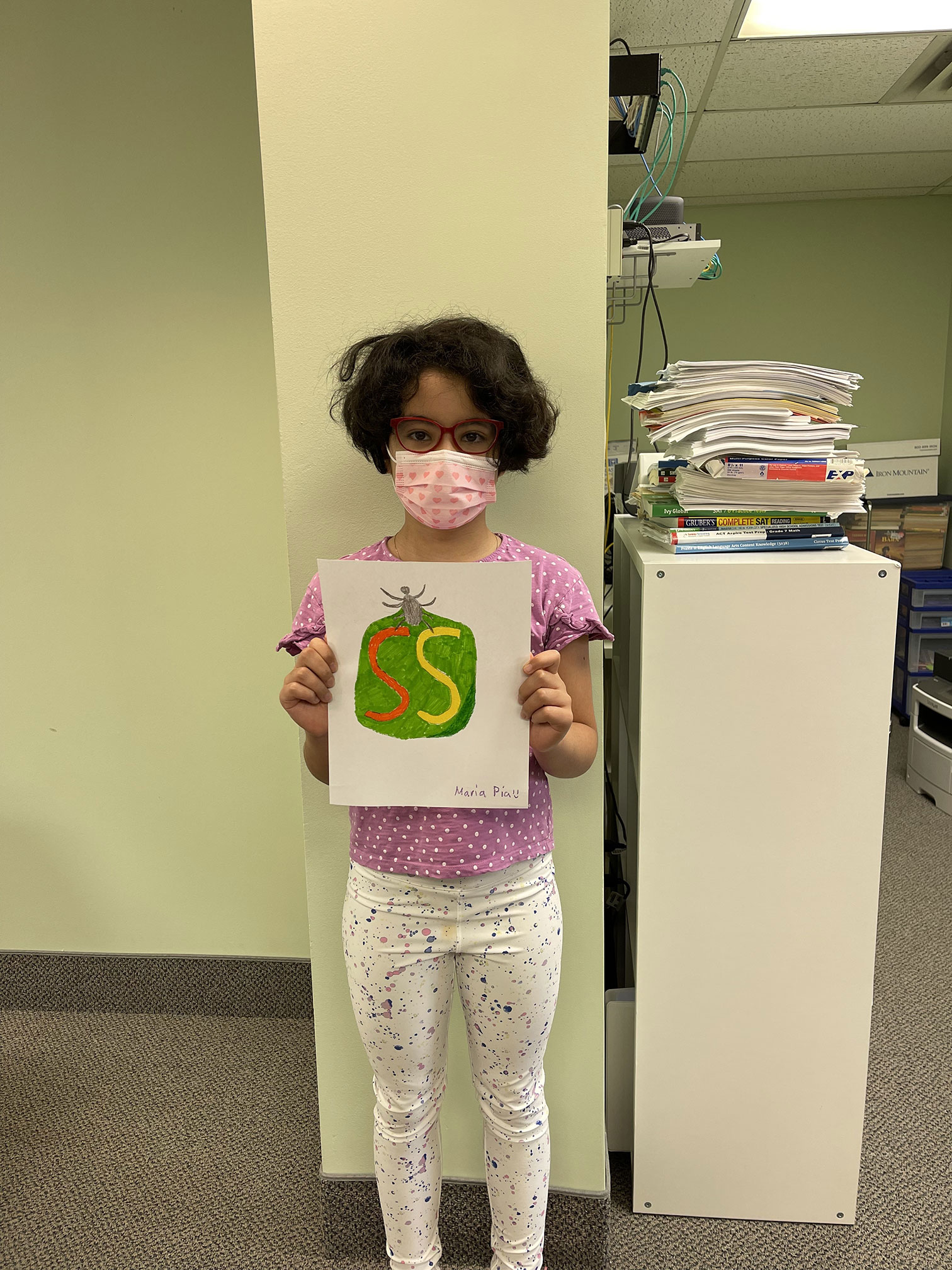


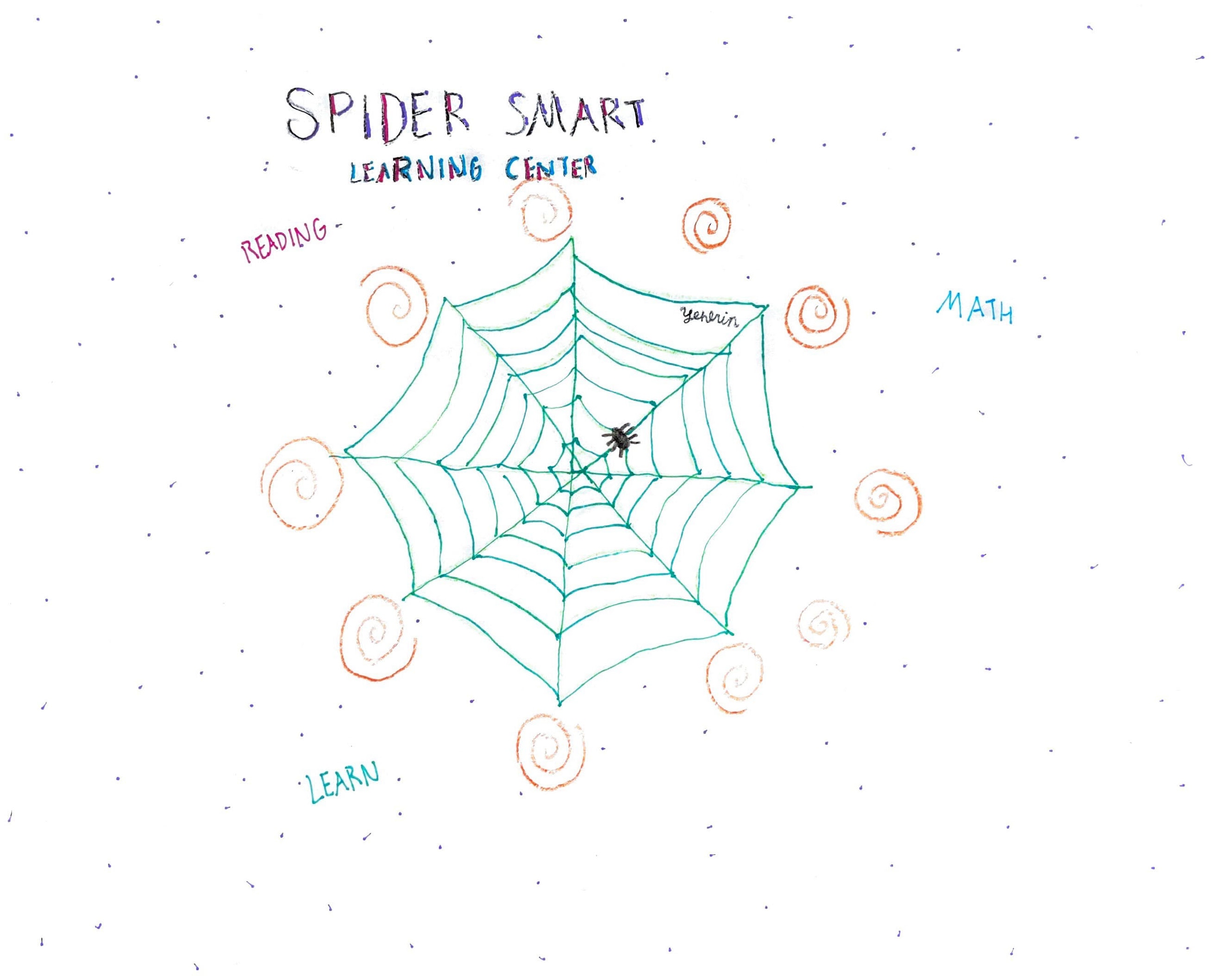


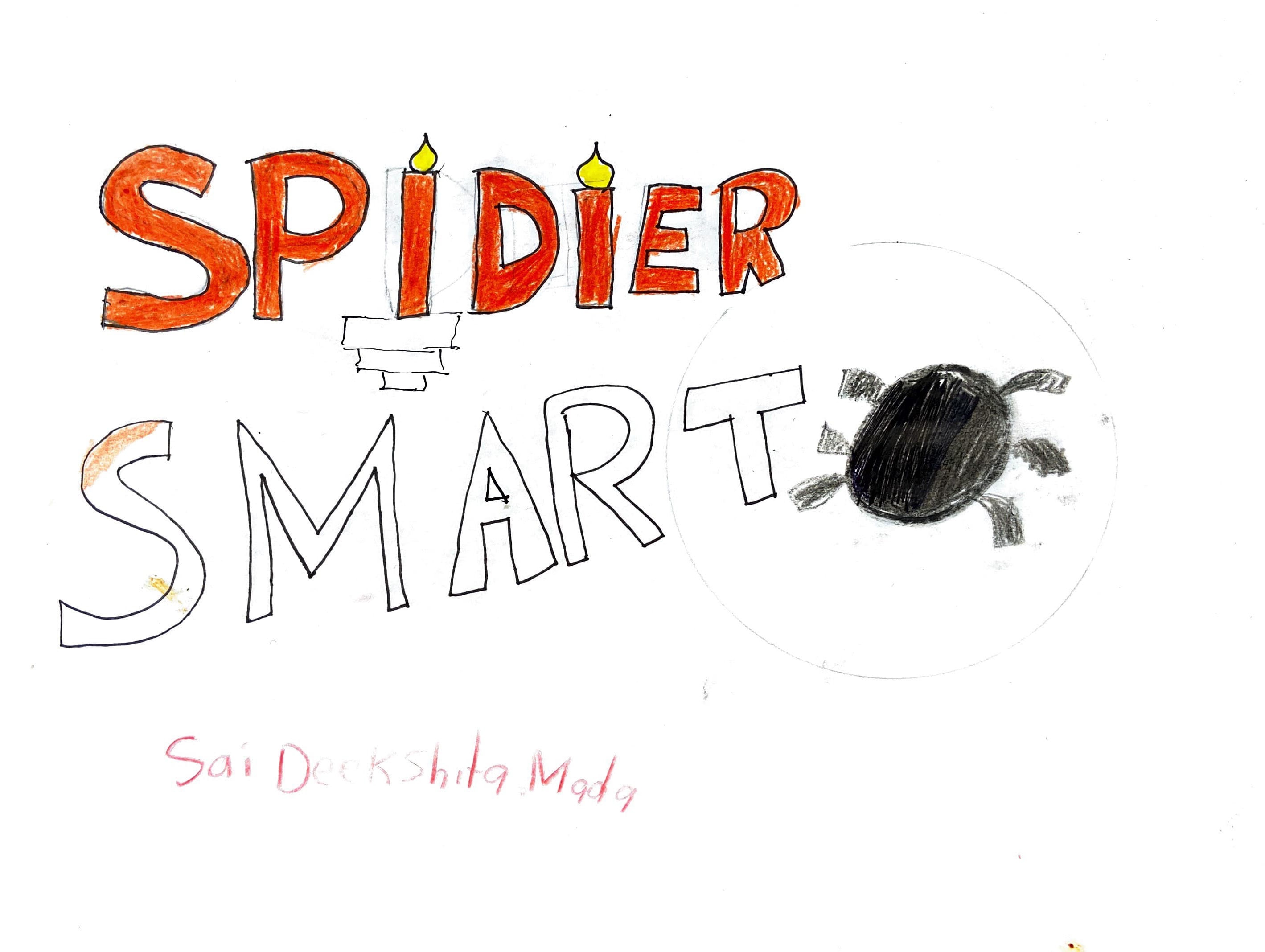
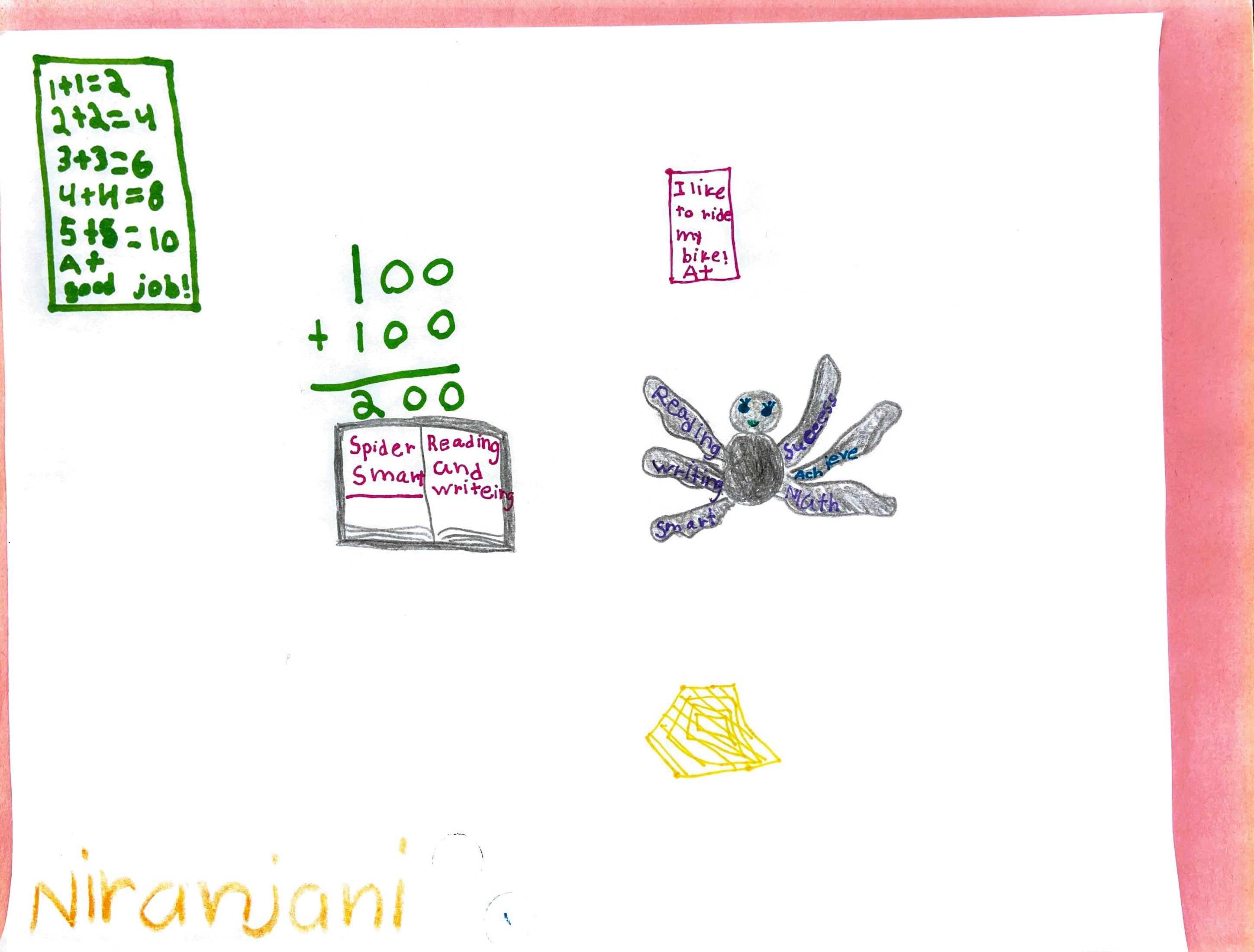



Also, congratulations to our two raffle winners: Alan Wang, iPad, and Vishnu Chilukuri, TI-84 graphing calculator.
SpiderSmart is proud to have spent the beginning of summer vacation with everyone who came out to the event. We will continue to host events like this in the future so STAY TUNED!

Reading Is the Key to Learning
How do we transform our children into readers?
June | 2022Children become lifelong readers for various reasons. There may have been a book that truly captured one’s imagination, there may have been a book that ignited a fire for fine-tuning one’s writing style, or simply put, there may have been a book that they read for pleasure.
Here are some tips for raising a lifelong reader:
- Read to both little and big kids: Whether it’s bedtime story time or family read-aloud time, children can benefit from hearing the rhythm of the language, learning how to pronounce words correctly, and relaxing and letting the story seep in their brains.
- Read old favorites: Classics are there for a reason. Try introducing books you loved as a kid: Harry Potter Series, Charlotte’s Web, Chronicles of Narnia.
- Pick books about topics children love: Dinosaurs, fire trucks, cars.. . . you name it! Kids will always love reading about the things they are interested in.
- Use humor to your advantage: Some books that are out there, such as Diary of a Wimpy Kid or Captain Underpants, may be books parents do not want their children to read in fear that children will imitate these book characters. As long as you talk about the content with them, let them enjoy the story itself!
- Make reading a family value: Don't just preach to kids about reading. Be the example!

Raising a Lifelong Learner
Tips to instill a love of learning in your kids
May | 2022Grades and tests are important. However, it is even more important to instill a love for learning in children. Research indicates 4 out of 10 U.S. high school students have little to no interest in school. As students get older, some become less interested about learning and more about achievement. As a result, students may start to think learning is not fun.
Start early, inspire often. Young children almost always find just about everything fascinating. Take advantage of this voracious appetite!
Model learning. Don’t just talk through the learning process with children. Show them!
It’s not always about the “right” answers. Too often, learning is about getting the “right” answer. Instead of always trying to be the expert, have your kids explore and let them teach you along the way.
Go beyond subjects and help them master skills. Math, reading, social studies, and science are important subjects for your students to master, but keep in mind that there are other skills for students to learn such as perseverance, empathy, and kindness.

Screen Time in the Age of the Coronavirus
Technology, used correctly, can benefit kids
May | 2022One thing the current media crisis has highlighted is how unbelievably social kids are and how much they want to be. More and more children are watching Netflix and playing video games. They’re also video chatting more and pursuing their interests online. Although nothing can replace in-person interaction for children, using tech to strengthen relationships is more important than ever.
According to Common Sense Media, media researchers have been advocating for a shift from evaluating quantity of screen time to quality of content. This type of research is critical, especially during the pandemic era. Here are some recommendations when it comes to using technology.
Good content is key. Choose age-appropriate, high-quality media and tech for your kids.
Get creative. Let kids use your phone to shoot pictures and videos and edit them using tools. Give them a challenging prompt to take pictures of something round and then write a story connecting each thing.
Balance still matters. Screentime is important for each child, but also make sure they are spending enough time outside being active.
Upcoming SAT Test Dates
May | 2022As the school year approaches its end, students are getting ready to study for their SAT. Summer’s the perfect time for high schoolers to get ahead for college! SpiderSmart Tyson’s Summer SAT Test Prep Program starts June 13! Click here to learn more.
Here are the anticipated SAT dates for the 2022-2023 school year:
- August 27, 2022
- October 1, 2022
- November 5, 2022
- December 3, 2022
- March 11, 2023
- May 6, 2023
- June 3, 2023
A trusted name in Northern Virginia for 30+ years, SpiderSmart Tysons now offers 2-week-long SAT test prep programs:
- SAT Deep Dive (9AM—12:30PM)
We take your high schooler beyond the basics and reveal the secrets in how the College Board frames SAT questions. Your student will learn to identify patterns and respond with the right answers, quickly and confidently, helping them achieve their best scores. - Critical Reading Mastery (1—3PM)
For many, the Reading section is the trickiest section of the SAT. We train your high schooler how to deconstruct reading passages, make sound inferences, and ace the Reading portion of the SAT.
여름방학은 학생들이 대학 진학 준비를 할수있는 완벽한 시간입니다!
30년 동안 북부 버지니아에서 신뢰받는 SpiderSmart Tysons Corner에서 SAT Test Prep 강의를 6/13부터 시작합니다.
- SAT Deep Dive (9AM-12:30PM)
College Board에서 SAT문제를 어떻게 구성하는지 궁굼하신가요? 이 프로그램을 통해서 학생들은 문제별 패턴을 식별하고 올바른 답변을 자신 있게 고를수 있게 될것이고 따라서 최고의 점수를 달성 할수있는 방법을 배울것입니다. - Critical Reading Mastery (1-3PM)
많은 학생들이 SAT에서 가장 까다롭게 생각하는 섹션은 Reading입니다. 이 프로그램을 통해서 학생들은 Reading Passage들을 정확하게 분해하고 또 정확하게 추론을 해서 SAT Reading섹션을 에이스 하는 방법을 배울것입니다.
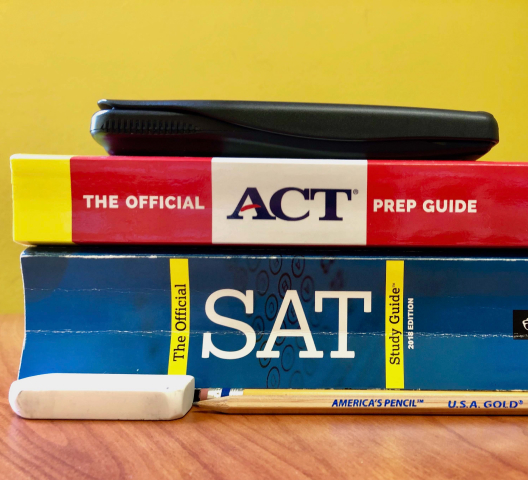
Welcome Back SAT/ACT!
MIT reinstitutes requirement for all applicants
April | 2022In late March, the Massachusetts Institute of Technology announced that for fall 2023 admissions it will reinstate its requirement that all applicants submit scores from an SAT or ACT exam, a reverse in policy that will likely ripple out to other colleges and universities.
The onset of Covid in 2020 saw a marked rise in criticism of standardized tests, with many openly opposing SAT/ACT score requirements for college admissions. More than three-quarters of colleges are no longer requiring the SAT or the ACT for admissions.
MIT’s announcement, however, is a significant departure from recent trends. MIT’s rationale on why it decided to revert to requiring test scores is because going “test-optional” tends to raise rather than lower socioeconomic barriers. It turns out that dropping test score requirements actually hurts low-income students, rather than assisting them. According to The Atlantic, getting rid of testing does not get rid of the inequitable policies that systemically deprive some children and adolescents of clean water, nutritious food, green space, safe neighborhoods, new classrooms, stimulating teachers, and enriching cultural experiences. Dropping admissions testing requirements means other factors–such as essays, recommendations, and coursework–must be weighted more heavily. Because these factors are more strongly correlated with family income than test scores, dropping test scores actually tilts the playing field even more in favor of well-off students.
Click to Read The New York Times article
Participating in higher education has now become an absolute need in American society. Standardized testing will not solve the unequal societal issues we see today, but it can certainly become a means to make the pathway to higher education fairer.
In response to what we view as a reversal in the importance of standardized tests, particularly the SAT and ACT, SpiderSmart is investing in broadening and deepening its test prep program and is piloting this program during the summer of 2022.
SpiderSmart at Tysons Center is offering two SAT/ACT prep programs for students in 9th to 12th grade:
SAT Deep Dive (9am to 12:30pm): Ideal for students taking the SAT test in August or early fall. Breaks down the SAT in terms of its format, concepts tested, and winning strategies, so students are better prepared to reach their potential.
Critical Reading (1pm to 3pm): Focused on reading short articles and book excerpts. Helps students deepen their vocabulary, learn how to make accurate inferences, and master reading comprehension skills.
Each class is offered during the following four sessions (two weeks per session):
- Session 1: June 13 - June 24
- Session 2: June 27 - July 8
- Session 3: July 11 - July 22
- Session 4: July 25 - August 5
To register: https://docs.google.com/forms/d/e/1FAIpQLSdb9jiLe5YqwzSUi_2QBQZZ5CkbHsrG0z67CCQq4GilPB91jQ/viewform?usp=sf_link

SpiderSmart Summer Camp 2022!
April | 2022Summer is right around the corner. Have you started planning for summer break 2022? Good news! Registration for SpiderSmart Summer Camps has begun! We offer early bird discounts so don’t miss out and plan ahead!
SpiderSmart at Tysons Center (Virginia) is offering a wide range of programs for pre-K to 8th grade students. Camp hours are from 9am to 12pm and from 12:30 to 2pm, Monday through Friday, during the following four sessions (two weeks per session):
- Session 1: June 13 - June 24
- Session 2: June 27 - July 8
- Session 3: July 11 - July 22
- Session 4: July 25 - August 5
SpiderSmart at Tysons Center is also offering two SAT/ACT prep programs for students in 9th to 12th grade: SAT Deep Dive, from 9am to 12:30pm, and Critical Reading Mastery, from 1pm to 3pm, Monday through Friday, during the following four sessions (two weeks per session):
- Session 1: June 13 - June 24
- Session 2: June 27 - July 8
- Session 3: July 11 - July 22
- Session 4: July 25 - August 5
To register: https://docs.google.com/forms/d/e/1FAIpQLSdb9jiLe5YqwzSUi_2QBQZZ5CkbHsrG0z67CCQq4GilPB91jQ/viewform?usp=sf_link
SpiderSmart in Suwanee (Georgia) is offering Summer Camp programs from June 6 to July 21 (no classes will be held July 4 to 7).
- Rising 2nd and 3rd graders: 1pm to 4pm on Mondays and Wednesdays (Reading & Writing, Math)
- Rising 4th and 5th graders: 1pm to 4pm on Tuesdays and Thursdays (Reading & Writing, Math)
- Rising 6th graders: 1pm to 4pm on Tuesdays and Thursdays (Reading & Writing, Math), 2:30pm to 4pm on Wednesdays (Math only)
For more information and to register, please call at 770-827-0012.

Help Your Kid do Their Best
10 ways you can help them help themselves
April | 2022On average, kids spend 900 to 1,000 hours per year in school. Parents and guardians always need to make sure their kids are getting the best education possible during those hours. Here’s a list of things to help make sure that happens.
- Participate! Get involved. Get to know your teachers and other parents and try to attend school events! Seeing you actively involved can boost students’ confidence levels.
- Make sure homework gets done. Checking to see what your students’ assignments are complete is crucial. If your students are struggling through their homework because they aren’t understanding the materials, call for help!
- Are your kids ready to learn when they’re at school? Make sure your students get good nutrition and go to sleep at a consistent bedtime. Helping students settled on an established routine will help.
- Organization, organization, organization! One of the most valuable skills students will learn in school is organization. Teach your students to put things away when they’re done with them and organize things like clothes and books.
- Foster strong study skills! Help your students establish study habits. Some study skills include: having a study plan, exhibiting a positive attitude, and being open to learning.
- Be punctual. Unless there is a special occasion or they are sick, make sure your students are always at school on time.
- Let them experience failure on their own. Parents always want to do things for their kids. Sometimes, though, kids need to fail, and doing something less than perfectly shows them they may have to try harder next time. Simply guide them to the right direction.
- Instill discipline, respect for others, and self-esteem. Parents should handle most of the disciplinary actions that affect their students.
- Be knowledgeable about what your child is studying. To connect with your students more, you need to know what your student is studying.
- Give praise and encouragement! Positive reinforcement of the things students do right builds their confidence, helps them succeed, and allows them to navigate schools and society with the knowledge that they can do better.

The Power of Tutoring
A time-tested solution in unprecedented times
March | 2022Covid-19 has drastically affected education the past two years. Many students were forced to transition to online schooling for extended periods, causing some to fall behind. In addition, the financial costs and uncertainty from the pandemic, along with the continuous practice of social distancing, damaged every student’s ability to focus and learn in a school setting.
Even prior to the pandemic, the United States as a whole struggled with a stratified, unequal education system in which millions of students were behind grade level. Coupled with today’s rapid shift toward internet-based learning the country faces further educational inequalities.
When it comes to considering possible interventions designed to help students get back on track, or even get ahead, tutoring–defined as one-on-one or small-group instructional programs–is remarkably effective at helping students learn. However, there are currently millions of tutoring services out there, and parents may find it difficult to find the “right” tutoring service.
When looking for a tutoring service, it is essential to consider the following:
- Who does the tutoring matters a great deal.
- The effects of tutoring programs tend to be strongest among students in earlier grades.
- Tutoring generally exerts strong positive learning effects across a wide range of programming.
Because SpiderSmart prioritizes every student as an individual, we highly emphasize using a holistic approach when teaching our students. Our Human Resource (HR) team continuously works to hire the best teachers and ensures every student is matched with the right teacher.
Here’s how SpiderSmart chooses the right teachers:
- We run an extensive background check on all of our applicants. We recognize the importance of providing a safe, fun, and interactive learning environment for all of our students. We want every student to feel comfortable with their teacher, and to do that, we run a very strict background check on each applicant.
- Our HR team conducts a multi-step interview to ensure the quality of the tutor applicant. We conduct multiple interview sessions, including mock teaching sessions, with the applicant to ensure the quality of each teacher.
At the end of the day, SpiderSmart always puts our kids first. It’s in our DNA. We will never stop working diligently to provide the best quality services with the best quality teachers.
Click here to read more about about tutoring from the Brookings Institute

10 Study Habits of Highly Effective Students
Study smarter, not harder
March | 2022For most students, an hour or two of studying everyday is usually enough to make it through high school with good grades. But as students get older, there is often not enough time in the day to get all studying done if they don’t know how to study smarter, not harder.
- Don’t cram all your studying into one session. Successful students will always space their work out over shorter periods of time and rarely try to cram all of their studying into just one or two sessions.
- Plan when you’re going to study. Plan, plan, plan! Keeping up with a manageable study routine is crucial to becoming a successful student.
- Study at the same time. When you study at the same time each day, your studying will become a regular part of your daily routine.
- When you study, do so with a specific goal. Don’t mindlessly study everything at once. Have a clear goal in place.
- Never procrastinate in your planned study session. Procrastination leads to rushing, and rushing is the number ONE cause of errors.
- Start with the most difficult subject first. Once you have completed the most difficult work, it will be much easier to complete the rest of your work.
- Always review your notes before starting an assignment. Take good notes in class! This will save lots and lots of time for you at home.
- Make sure you’re not distracted while you’re studying. It’s more effective when you don’t multitask when you’re studying. Focus on one thing at a time!
- Use study groups effectively. Get help from others! Make sure your study groups are structured.
- Review your notes, schoolwork, and other class materials over the weekend. Make sure you’re continuing to review notes during the weekend. Doing so will always keep your memory fresh!

How to Use Praise to Motivate
Who doesn’t like a pat on the back every now and then?
March | 2022Everyone loves getting praise. Kids especially want to receive praise from their parents and teachers. There is no such thing as a “good” or “bad” student; students simply want to receive praise from adults, whether it’s from parents or teachers. Although it may seem like praise only benefits students, adults can also benefit from praise by strategically incorporating the act of praising throughout their daily routines.
Intermittent reinforcement is a term that means “rewarding behavior on some but not all occasions.” This term focuses on the concept of uncertainty and how it can be motivating. If parents and teachers praise students strategically and periodically for completing their work, getting good grades, or showing positive behavior, students will be incentivized to continue the good behavior in hopes of receiving praise the next time.
“칭찬은 고래도 춤추게 한다”라는 말을 한번쯤은 들어본적이 있을것입니다. 모든 사람들은 칭찬받는 것을 굉장히 좋아합니다. 이 세상에는 “좋은,” “나쁜” 학생이라는 것은 결코 없습니다; 학생들은 그저 부모님 혹은 선생님들에게서부터 항상 칭찬을 받고 싶어하는것 뿐이죠.
칭찬의 중요성에 대해서는 잘 알고 있지만, 학생들에게 언제 어떻게 칭찬해야 하는지 모르는 부모나 선생님들은 많습니다. 칭찬은 간헐적으로, 그리고 구체적으로 해줄수록 더욱더 효과적 입니다. 칭찬은 뭐든지 많이 해주면 좋은게 아닙니다. 자신감이 없는 아이가 과한 칭찬을 받을 경우 다음번에도 똑같이 잘해야 한다는 부담감을 느낄 수 있기 때문입니다. 칭찬은 피그말리온 효과를 일으킵니다. 피그말리온 효과는 한 개인의 기대가 현실로 들어나 다른 사람의 행동에 긍정적인 영향을 주는 것을 일컫는 말입니다. 만약에 한 학생이 선생님으로부터 학습능력의 관한 칭찬을 받게 되면 그 학생은 다음에도 그런 칭찬을 받기 위해 많은 노력을 할 것이고, 그 노력을 통해서 실제로 학습능력은 더욱더 발전할 것 입니다.
Click here to read to see what Edweek says about praising as a way to motivate students.
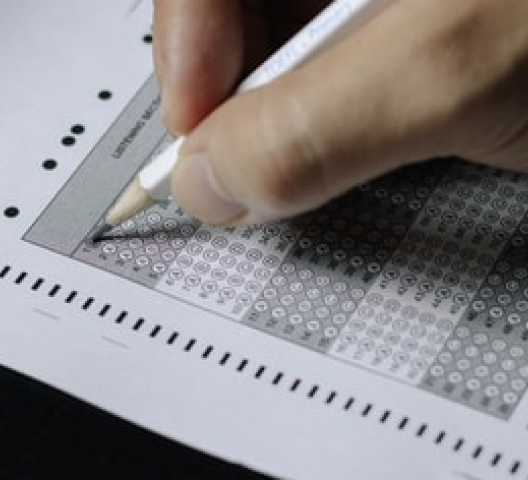
Put Down Your No. 2 Pencils
Forever.
February | 2022The College Board recently announced that the SAT will soon be taken exclusively on a computer, ending an era in which high schoolers have had to make sure their No. 2 pencils were sharpened and their answer bubbles were completely filled in.
Students will have to complete the test on laptops or tablets at designated testing centers, and the SAT will also be shortened from three hours to two. The changes will be implemented in 2024 in the United States.
Click here to read the New York Times article on specific changes to SAT
Although a growing number of colleges have eliminated the requirement that applicants submit scores from the SAT or the competing ACT, you can stand out in front of the crowd by working toward a solid score on the SAT or the ACT and submitting the scores with your application.
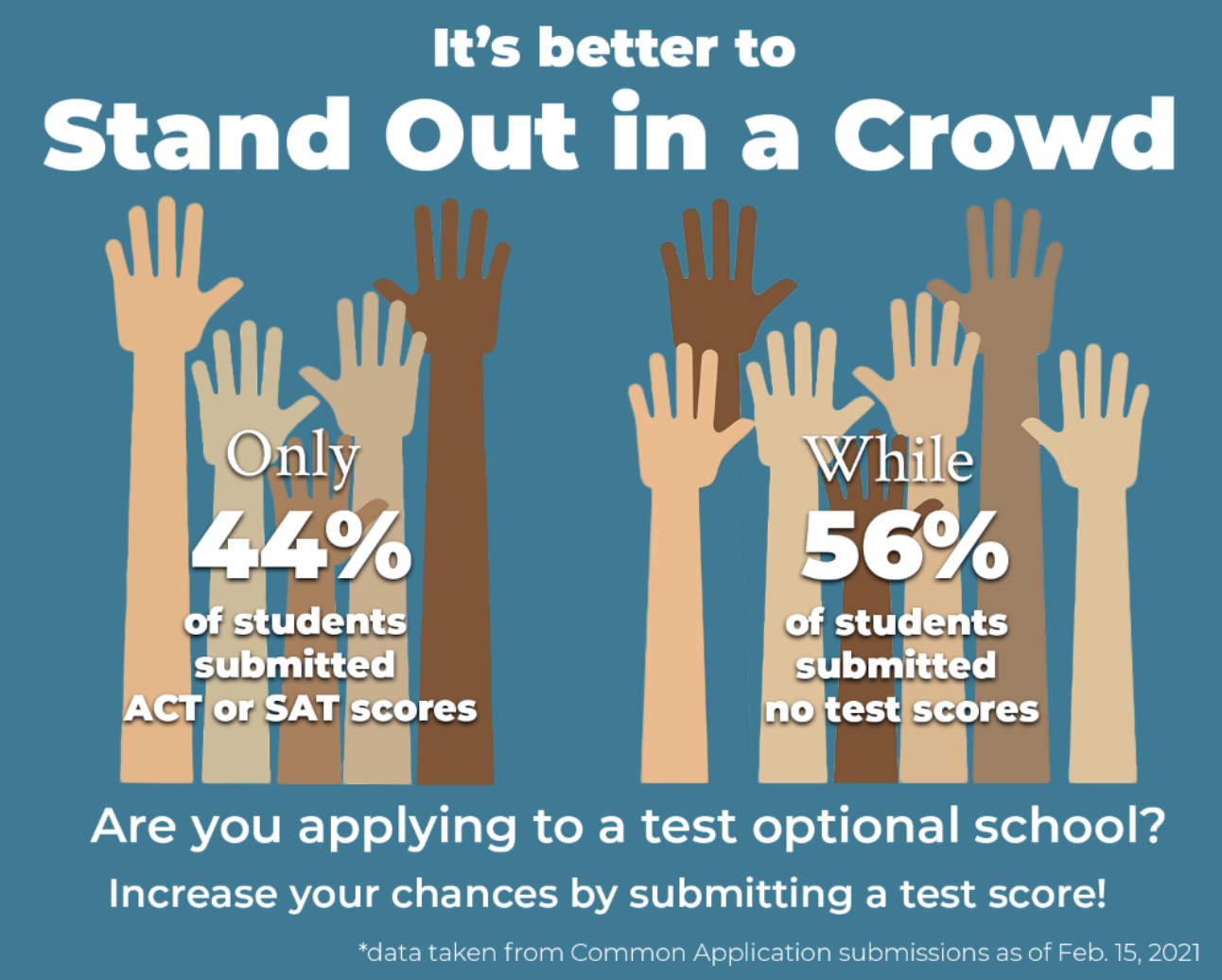
Want to get a head start on preparing for the SAT or ACT? Contact us today!

Digital Citizenry
Things to consider as students rely more on technology
February | 2022Students today are using the immense power of digital media to explore, connect, create, and learn in ways never before imagined. With this power, young people have extraordinary opportunities. They also face potential pitfalls. Schools across the United States are dealing with issues like digital cheating, cyberbullying, and safety and security concerns.
Below, we focus on four XXXXs and suggest some videos to watch and games to play with your children so he or she uses digital media the right way.
- Digital Identity. Students cultivate and manage their digital identity and reputation and are aware of the permanence of their actions in the digital world.
- Positive Behavior. Students engage in positive, safe, legal, and ethical behavior when using technology, including social interactions online or when using networked devices.
- Intellectual Property. Students demonstrate an understanding of and respect for the rights and obligations of using and sharing intellectual property by appropriately using, citing, and sharing according to copyright and fair use doctrines.
- Personal Data. Students manage their personal data to maintain digital privacy and security and are aware of data collection technology used to track their activity online.

Grading: A Slippery Slope
Do grades always reflect students’ mastery of a topic?
January | 2022If some colleges are relying less and less on test scores, students’ grades become an even bigger factor in admissions decisions. No matter what other reforms occur in schools, grading remains one of the cornerstones of practice. However, according to Dr. Paul Dressell of Michigan State University, a grade is an inadequate report of an imprecise judgment of a biased and variable judge of the extent to which a student has attained an undefined level of mastery of an unknown proportion of an indefinite amount of materials. (How’s that for a mouthful?)
Here are a few more considerations about the accuracy of grades (Hechingerreport.org):
- Only one-third of high school graduates are prepared for college.
- At least 25% of freshman have to take remedial coursework.
- Only 1 in 4 students needing remedial coursework ever graduates from college.
- The majority (80%) of students enrolled in remedial courses had a 3.00 or above GPA in high school, and both they and their teachers thought they were prepared for college.
What affects grades?
Grades are always affected by some degree of error (E):
Observed Score (X) = True Score (T) + Error (E).
In reality, the grades students receive (X) are always going to be impacted by error (E). This is because the true score (T) (i.e., what students understand, know, and can do) is always impacted by some extraneous factors.
Therefore, teachers and graders should always try to minimize error (E) so that (X) is as close to (T) as possible.
What Grades SHOULD Be:
- Grades should be a representation of students’ mastery of the learning targets for a unit or for the year. Grades should indicate the degree to which students have met the required UKDs (Understand, Know, and Do) that were the basis of the curriculum, instruction, and assessment cycle in a classroom.
What Grades SHOULD NOT Be:
- Grades should not be a representation of things that cannot be measured or that do not reflect students’ mastery of course content. Teachers should not attempt to grade: students’ behaviors, students’ attitudes, students’ work ethics, or students’ efforts.
For example, many teachers want to grade effort. However, what if you have one student who, with minimal effort, can master the UKDs, but another student who tries really hard, but does not reach mastery? Should the latter student score higher than the first? If teachers pass a student just for trying, what happens when that student encounters new, more challenging material? Are teachers setting that student up for failure?
Sources of Error in Grades
Educators and academic agree that the following are often sources of error in the grading process:
- Grading for behavioral issues
- Incorporating teacher expectations into grades
- Using zeros as punishment
- Using a points systems and means
- Grading homework and other formative assessments
- Grading on a curve
- Allowing extra credit or bonus points
- Grading for completion
Thus, in order to make sure grades are as close to accurate as possible, it is extremely important for teachers to make sure grades are consistent, fair to each student and other students, and accurate reflections of true achievement.
For students, grades must: keep the success-to-effort ratio in balance, seem equitable and fair, and reinforce a growth mindset.
For parents, grades must: communicate clearly about student learning and support the parent in supporting learning.

GPA vs. SAT/ACT
Which one is more important in the COVID era?
December | 2021The years 2020 and 2021 were filled with disruption, particularly in the academic space. With schools moving to online learning environments in 2020 and most of 2021 and colleges temporarily dropping standardized testing requirements, what should students focus on in 2022?
What does “test-optional” mean?
Many rejoiced at the news that schools were going test-optional in response to the pandemic – which is one fewer thing to worry about in the extremely overwhelming application process. Unfortunately, however, test-optional does not mean that colleges will dismiss standardized test scores. In fact, it means that should you decide to apply without submitting any scores, you will most likely be evaluated on a more holistic basis. In other words, if you apply test-optional, your college candidacy will be measured by GPA, transcript rigor, essays, and extracurricular involvement.
This is important because many students may think this is a good thing. For those who struggle with standardized tests but have a strong GPA, test-optional will be a good opportunity for you to showcase your strengths while avoiding the scary standardized test scores. However, everyone else may also be applying test-optional.
Ever since schools dropped testing requirements, some schools are reporting up to a 40% increase in the number of applicants for Fall 2020. Prior to COVID-19, GPA was a reliable predictor of success in college. A student with a high GPA over the course of his/her academic career demonstrated aptitude, rigor, and discipline. The COVID-19 era drastically shifted this view: with many schools going virtual and the academic year significantly disrupted, GPA as a reporting metric became less reliable. Many schools across the United States adopted a pass/fail grading system, and reports of grade inflation dramatically increased as well. Thus, with GPA becoming a less reliable metric for academic success, standardized test scores are and will be more important when applying to college.
Now that COVID-19 has drastically affected your college candidacy, there are a number of things you can do to stay competitive:
- Always turn assignments on time.
- Take AP courses throughout high school in subjects that interest you and in which you can do well.
- Prepare for and excel in the SAT or ACT.
- Get involved in your community.
- Participate in extracurricular activities.
It will be crucial for you to do everything and anything you can to become the ideal candidate for college. Especially with the shift to test-optional, the current paradigm seems to emphasize the importance of test scores.

Standardized Test Scores for “Dummies”
What are standardized tests?
December | 2021Students are taking more standardized tests than ever before. What this means is that parents are seeing more and more test results, and oftentimes, parents may not know what these test scores even mean!
What are standardized tests?
Standardized tests:
- Have uniform procedures for administration and scoring.
- Allow comparison of student scores by age, grade level, local norms, and national norms.
- Attempt to include material common across most classrooms.
- Can be used as formative assessments (a common benchmark used across a grade level at your child’s school) or summative assessments (the Virginia SOLs).
Why take standardized tests?
Standardized tests are used to:
- Diagnose students’ strengths and weaknesses.
- Provide information about students’ progress to parents.
- Inform a student’s program placement or access to extra services (ESL, Reading Intervention, Special Education)
Currently, there are two main types of standardized tests: criterion-referenced and norm-referenced.
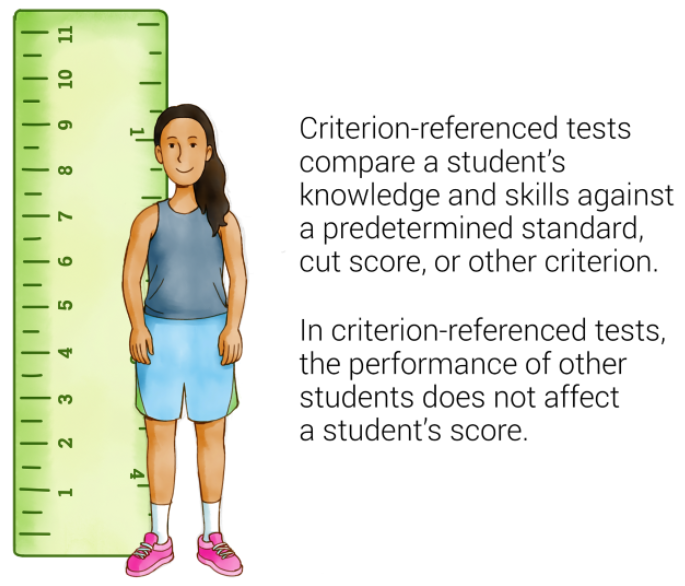
Criterion-referenced scores are generated based on whether or not students met a predetermined criterion. The performance of other examinees is irrelevant.
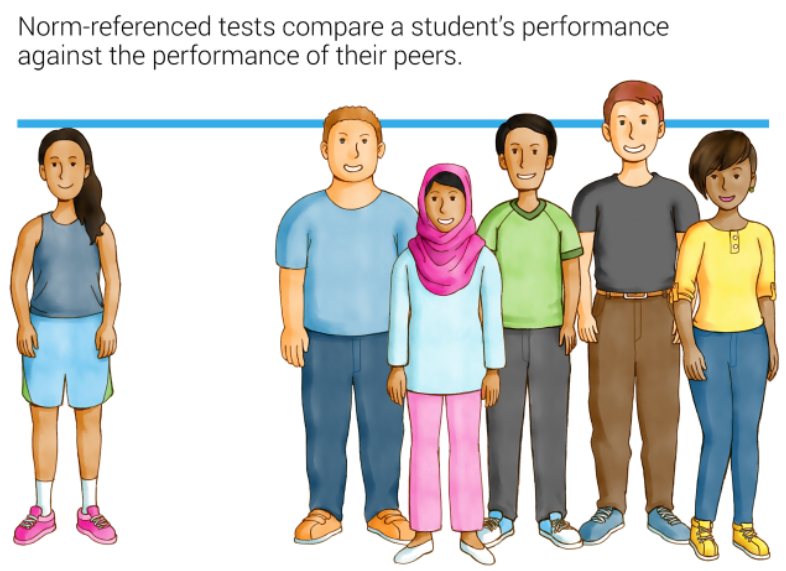
Norm-referenced test scores, on the other hand, are generated based on where a student performed relative to the peer or norming group. The purpose of norm-referenced test scores is to distinguish between high and low achievers.
Now that we covered the two main types of standardized tests, it is important to learn about the four commonly-reported scores: raw scores, percentile ranks, stanines, and grade equivalencies.
A raw score is the number of points earned from correct answers on a properly scored test (e.g., 50/50, 50/100). Raw scores should not be used directly in interpretation. Rather, it should be converted into something more comparable/meaningful.
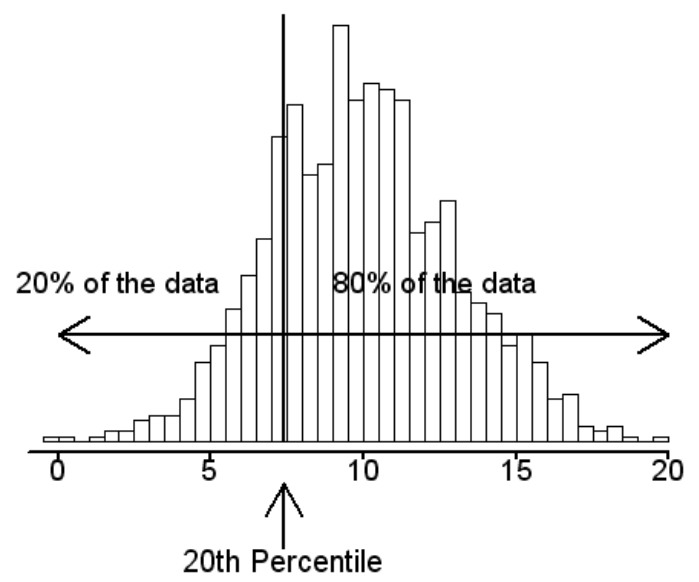
Percentile rank scores rank individuals within a group. Percentiles are defined on a scale of 1 to 99 with 50 being average (mean). Percentile rank scores show the percentage of scores in the testing group that are at or below a specific student’s raw score. For example, when a student receives a percentile rank of 20, this means that he/she scored the same as or higher than 20% of test takers.
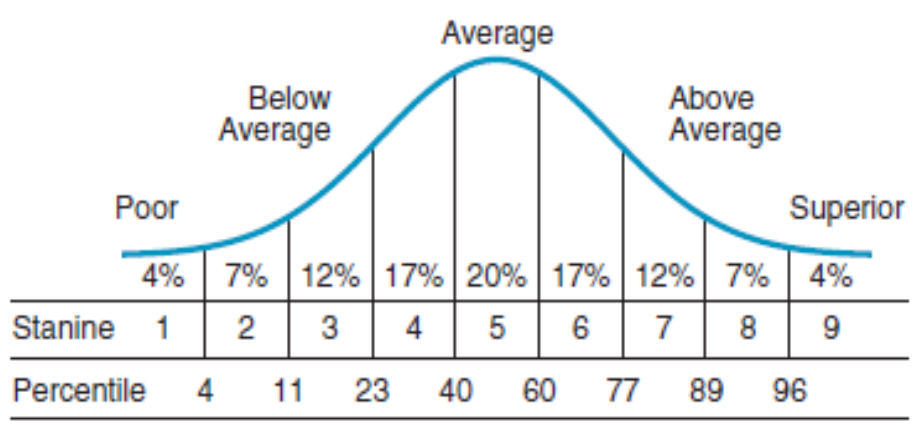
Stanines divide the normal curve into nine “regions,” and they compare students’ scores from a low of 1 to a high of 9. Scores of 1-3 are considered below average, 4-6 are considered average, and 7-9 are considered above average.
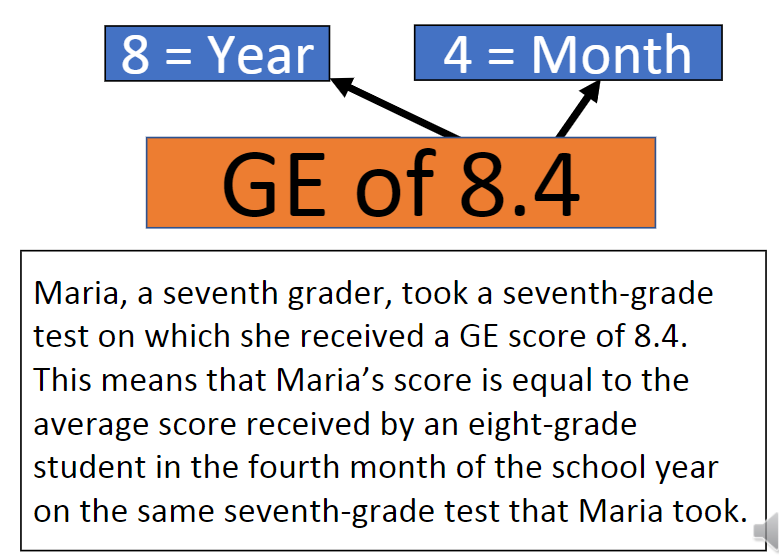
Lastly, grade equivalency scores are composed of two numbers:
- The first digit represents the year of the grade level.
- The second digit (after the decimal point) represents the month of that grade level. It’s critical to note that grade equivalencies is not an estimate of the grade in which a student should be placed.
How is this important to you as a parent? Oftentimes, especially as you walk into your child’s parent-teacher conferences, you will find that teachers will simply throw test results at you expecting you to understand! Use this guide to your advantage so that you will not get lost during the conference; with this background knowledge in the back of your mind, you can ask critical questions to your child’s teachers such as, how can I help my child refine his strengths and weaknesses? What are you, as my child’s teacher, going to do to make sure my child meets/exceeds the national standards?, so that you and the teacher can set clear goals for your child for the upcoming school year.

The Collapse of China’s Online Tutoring Platforms
How is this affecting online tutoring in the US?
November | 2021Thousands of highly qualified teachers across the United States work with students all over the world through online platforms. Because of the time difference, many teachers rise early to begin teaching for the day, often waking up between 4 and 5 AM.
In September, China banned private tutors from providing online tutoring, ramping up its effort to stamp out all for-profit tutoring. Authorities in China banned for-profit tutoring in subjects on the school curriculum in an effort to ease pressure on children and parents. A competitive higher education system has made tutoring services popular with parents. In China, wealthy and middle-class parents see private English tutoring--especially led by native English speakers--as a way to get ahead, a canny edge on other students against whom their own children would some day have to compete. The official reason for the crackdown is that the financial pressure on Chinese families and academic pressure on Chinese children have become untenable. The high-stakes culture around education in China has become so fraught that many parents say that they cannot justify having another child, despite the Chinese government’s encouraging them to do so. Because the government recognized this issue, it decided to act.
This government crackdown will dramatically change not only the fate not only of online tutoring companies but also of these highly qualified teachers. Some may decide to go “underground,” while others may try to find alternative ways to work elsewhere.
As a result of China’s ban on online tutoring, SpiderSmart has been receiving a heavy influx of tutor applicants. We’ve found that the quality of these tutors is highly variable. While some are quite skilled, others have been teaching kids using detailed scripts.
Because SpiderSmart prioritizes every student as an individual, we highly emphasize using a holistic approach when teaching our students. Our Human Resource (HR) team continuously works to hire the best teachers and ensure every student is matched with the right teacher.
Here’s how SpiderSmart chooses the right teachers:
- We run an extensive background check on all of our applicants. We recognize the importance of providing a safe, fun, and interactive learning environment for all of our students. We want every student to feel comfortable with their teacher, and to do that, we run a very strict background check on each applicant.
- Our HR team conducts a multi-step interview to ensure the quality of the tutor applicant. We conduct multiple interview sessions, including mock teaching sessions, with the applicant to ensure the quality of each teacher.
At the end of the day, SpiderSmart always puts our kids first. We will continue to work endlessly to provide the best quality services with the best quality teachers.

What does it mean to know a word?
Vocabulary building is key to SpiderSmart’s approach to reading and writing.
November | 2021Vocabulary building is key to SpiderSmart’s approach to reading and writing. Children need to learn 3,000 to 4,000 words each year so that by 12th grade, they have a reading vocabulary of at least 50,000 words. To learn vocab words efficiently, students need explicit vocab instruction and independent strategies with repeated, authentic practice.
Particularly for kids learning English as a second language, there are four comprehensive approaches to learning and mastering vocabulary:
- Providing rich and varied language experiences
- Teaching individual words
- Teaching word learning strategies
- Fostering word consciousness
The 3 Tier System is the most commonly used word selection system in schools. The most effective vocabulary instruction is contextualized and relevant, and the 3 Tier System does exactly that!
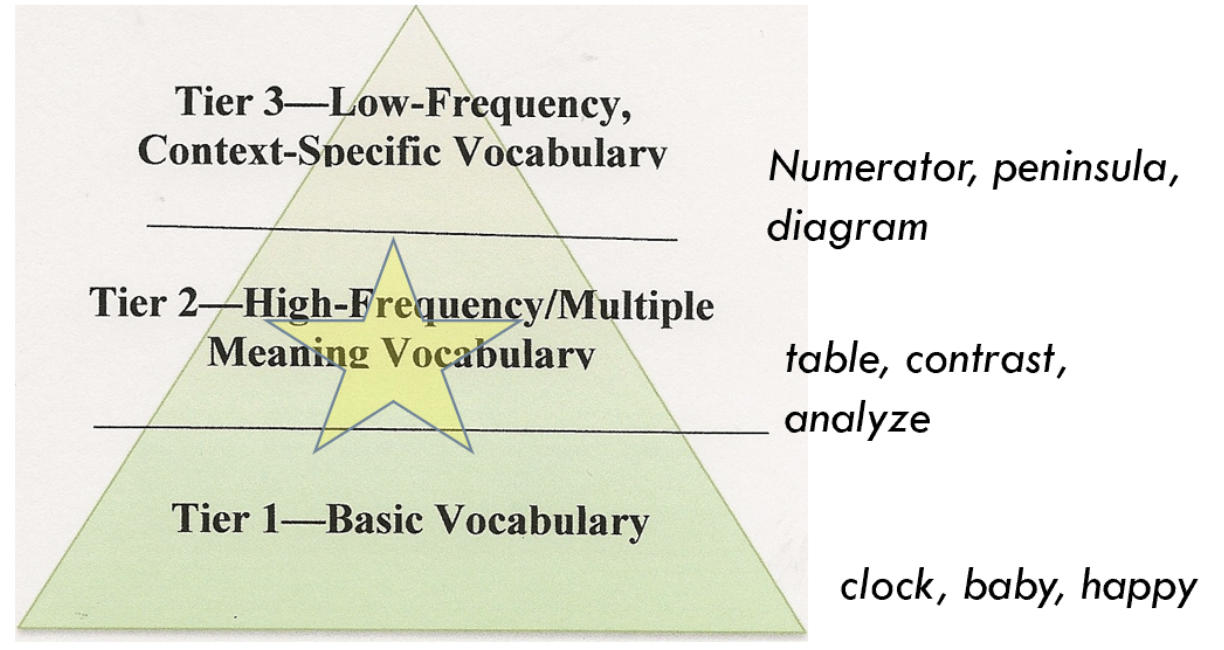
How does the 3 Tier System work? Let's look at an example excerpted from The House on Mango Street:
- There was a family. All were little. Their arms were little, and their hands were little, and their height was not tall, and their feet were very small.
- The grandpa slept on the living room couch and snored through his teeth. His feet were fat and doughy like thick tamales, and these he powdered and stuffed into white socks and brown leather shoes.
- The grandma’s feet were lovely as pink pearls and dressed in velvety high heels that made her walk with a wobble, but she wore them anyway because they were pretty.
Words that are italicized are tier 1 words, words that are underlined are tier 2 words, and words that are in bold are tier 3 words. According to research across the world, it is especially critical for students to learn tier 2 words: not only are these words used quite a bit, but they also often have multiple and different shades of meaning.

3 P’s for Effective Reading
Successful readers practice the 3 P's: Purpose, Preview, and Plan.
October | 2021In the dawn of a new school year, many students are determined to read more. It’s no secret that reading is good for you.
Here are 10 reasons why you should read more books this year:
-
Reading is good for your brain.
- “Reading is to the mind what exercise is to the body” (Joseph Addison).
- Today, scientific studies show that reading does make you smarter. Reading a novel, for example, increases the blood flow and improves connectivity in the brain.
-
Reading introduces you to new ideas and challenges you to solve problems.
- Reading helps you detect patterns, solve problems, and assimilate new information as if you were living in the characters’ shoes.
-
Reading makes you become a better writer.
- Whenever you read something, your brain automatically absorbs good writing techniques as well as vocabulary. Thus, when you write something, you will unconsciously copy the writing styles of books that grabbed your attention.
- Reading also enhances your vocabulary and spelling.
-
Reading improves your conversational skills.
- Reading increases your vocabulary and your knowledge of how to correctly use certain words in various contexts. Thus, reading helps you clearly articulate what you want to say.
-
Reading improves your self-discipline and consistency.
- Reading a book forces you to focus. To get the most out of a book or story, you must fixate on the plot and complete the book. In doing this, your brain forms deep connections and practices concentration.
-
Reading increases your knowledge of history.
- Reading can teach you various types of historical background information. Oftentimes, these facts are set in the context of a story, and it makes history easy to remember.
-
Reading increases cultural knowledge.
- Especially during the pandemic, it is very difficult to travel around the world. Reading books set in cultures that are different from our own provides knowledge of those cultures and the emotional and spiritual lives of the people who live there.
-
Reading challenges you to imagine.
- As you read a book, you find yourself in the characters’ shoes. Your brain often goes beyond the words on the page, and you imagine other details such as appearances and emotions.
-
Reading inspires you.
- Reading a good book is like being around an inspiring person.
-
Reading reduces stress.
- Reading is an excellent way to relax. It can ease tension in your muscles and heart while allowing your brain to experience new ideas and different emotions.
The following 3 P’s will allow you to engage with your reading, learn actively, and study more efficiently:
- Determine the purpose of the assignment:
- What is the “big picture” of the reading and how does it fit into the context of the course?
- Will a paper about this topic be assigned? If so, how does the assignment require you to use the reading?
- Preview the assignment with your purpose in mind before you actually read it:
- Read the chapter titles and headings. Do not just skim over them.
- Make a plan for how you will use the information from this reading--what will you need?
- Use chapter headings to:
- Set up an outline
- Test yourself later, especially if you are studying for an exam
- Selectively highlight or underline passages that you feel are important and relevant.
- Use chapter headings to:
Click here to read more about learning strategies provided by Cornell University.
The Scary Pitfalls of Plagiarism
In today’s e-world, parents need to be even more mindful of plagiarism
September | 2021 “I quote others only to express myself better.”
—Michel de Montaigne
Writing is a thinking process. For students in elementary and high school, it’s an wonderful opportunity to strengthen their thinking ability and to extend their minds, to gain a wider view of a subject, to find personal engagement with the world of ideas, even to make the unknown interesting. By writing down their ideas, students clarify them to themselves. But often their ideas are informed by the ideas of others. And if they don’t acknowledge this debt, they run the risk—often unwittingly—of plagiarizing.
By definition, to plagiarize means:
- To steal and pass off (the ideas or words of another) as one’s own
- To use (another’s production) without crediting the source
- To commit literary theft
- To present as new and original an idea or product derived from an existing source
Why use sources in essays?
Understanding the purpose of using sources in essays should result in better essays. Students who believe that sources serve no purpose other than to decorate or lengthen a paper are more likely to insert long quotations without taking much care to build them into the overall presentation. The result of such a practice is, at best, padding and, at worst, a disjointed collage.
Why cite sources?
You must cite the source of each idea or item of information you use, whether you quote, paraphrase, summarize, or merely refer to it. There are several reasons for this.
- Cite to help your reader: The primary reason for citing each use of an external source or idea is to provide a path for your reader to follow in the event he or she is interested in further reading.
- Cite to show respect for fellow knowledge workers: We live in an information age when processing information and creating knowledge out of it are major tasks of most educated workers. Just as you would not want others to take and use your ideas or writing without crediting you, you should not take the ideas or writing of others without crediting them. It is a matter of respect.
- Cite to avoid plagiarism: A fundamental requirement of academic work is that you clearly distinguish your words and ideas from those of the sources you use. Citation provides the basic mechanism of distinction. A substantial amount of plagiarism is committed unintentionally, simply because the writer did not know the rules or forms of citation. Yet, the penalty for such behavior is often severe because plagiarism is considered one of the most serious forms of academic dishonesty. Therefore, out of self-interest and self-protection, you want to be sure to cite your sources.
Guidelines for Citation
Plagiarism can be avoided by citing sources. You must cite someone else’s words you quote verbatim, text you summarize or paraphrase, ideas (interpretations, opinions, conclusions), data, surveys, and examples.
All you have to do is simply acknowledge that certain material has been borrowed. A citation is the way you tell your readers that material in your work came from another source. It is crucial to give credit to the original author by citing sources; it is the only way to use other people’s work without plagiarizing.
Citing your work does not make it seem less original. It’s actually the opposite. Citing sources helps your reader distinguish your ideas from those of your sources. This will actually emphasize the originality of your own work.
What Is Considered Plagiarism?
Plagiarism occurs when an information source is not properly credited. All of the following are considered plagiarism:
- Turning in someone else’s work as your own
- Copying words or ideas from someone else without giving credit
- Failing to put a quotation in quotation marks
- Giving incorrect information about the source of a quotation
- Changing words but copying the sentence structure of a source without giving credit
- Copying so many words or ideas from a source that it makes up most of your work, whether you give credit or not
It is extremely important that whenever you borrow words or ideas, you need to acknowledge their source. Although SpiderSmart recognizes there are many different types of citations out there, for the sake of establishing a good habit of always citing your sources, we recommend the following:
- Whenever you use quotes, whenever you use an idea that someone else has already expressed, or whenever you make specific reference to the work of another, cite your sources.
- When you cite your sources, put the author’s last name and the page number in which you found the quote.
Cautions about Quoting
Quoting too often. Too many quotations in a paper will push your ideas into the background and take over the essay, rather than act as a support to your writing. Remember that your own thinking is the purpose of the essay; you are not assembling a quotation dictionary. Quotations can range from fairly long to very short. As a rule, short quotations should appear more frequently than long quotations.
Quote is too long. A lengthy quotation is padding because in many cases that is exactly what is taking place. However, there is another reason for avoiding lengthy quotations: They are ineffective. Many readers have a habit of skipping past long quotations. An occasional four- to six-line quotation might be desirable, but a ten- or twelve-line quotation would need to be quite spectacular to be worth including.
Quotation Rules
Quotations use double quotation marks. Example: “Please pay attention,” he says.
Periods and commas go inside quotation marks. Example: The tutor says, “Remember the key differences between dependent and independent clauses,” and adds, “and don’t forget about coordinating conjunctions, too.”
Quoting within a quotation uses single quotation marks. Example: The faculty member said, “Our coffee has been called ‘coffee decadence’ by coffee critics.”
Quoting one word uses double quotation marks. The punctuation goes inside. Example: She called the gym “rejuvenating” and “fun.”
A parenthetical citation is part of the sentence but not part of the quotation. Example: The book says, “Don’t do this” (p. 123).
How to Cite Books and Short Stories for SpiderSmart Essays
As stated previously, there are many different styles for citations. The most well-known include those developed by the Modern Language Association (MLA) and American Psychological Association (APA).
SpiderSmart doesn’t require full-blown citations according to the MLA or APA style. Instead, we want you to establish a good habit of citing your sources (that is, the books and short stories we assign). We ask that whenever you borrow sentences from these books and short stories, we want you to cite them by writing down the author’s last name along with the page number you found the information. Here’s an example from a student essay:
Ikey Snigglefritz works as a tailor’s apprentice, earning $12 a week. His idol is Billy McMahan, the district leader. Snigglefritz views McMahan in a larger-than- life fashion. He stated, “how magnificent was Billy McMahan, with his great, smooth, laughing face; his gray eye, shrewd as a chicken hawk’s . . . what a king of men he was!” (Porter, pg. 2) . Due to McMahan’s immense wealth and power relative to Snigglefritz, Snigglefritz views McMahan as one of the most important people in his world despite the existence of many richer and more powerful men. This extreme perspective is demonstrated when Snigglefritz spends his week’s earnings to purchase drinks for McMahan, an event that McMahan will hardly remember. However, Snigglefritz would find this far more important since he had shared a drink with one of the most important people in his life.

School Avoidance: Identifying It and Responding
September | 2021Also known as “school refusal” or “school phobia,” school avoidance is not uncommon and occurs in as many as 5 percent of children. These children either refuse to go to school entirely or come up with reasons as to why they will not go to school. These reasons may include complaining of being sick with something, headaches, hyperventilation, and dizziness.
School refusal symptoms occur most often on school days. When these children are examined by a doctor, no true illnesses are detected or diagnosed. Most often, school-avoiding children do not know precisely why they feel sick, and they may have difficulty communicating what is causing their discomfort.
When school-related anxiety is causing school avoidance, the symptoms may be ways to communicate emotional struggle with issues like the following:
- Fear of failure
- Problems with other children
- Teasing or bullying
- Perceived “meanness” of the teacher
- Threats of physical harm
Tips for Parents
As students are going back to in-person instruction in the middle of the pandemic, it is crucial for parents to help children overcome this problem. Some guidelines include:
- Talk with your child about the reasons why he or she does not want to go to school.
- Acknowledge that you understand your child’s concerns, but insist on his or her immediate return to school.
- Discuss your child’s school avoidance with the school staff.
- Make a commitment to be extra firm on school mornings when children complain most about their symptoms.
- Ask your pediatrician if he or she can help ease your child’s transition back to school.
- Request help from the school staff for assistance with your child while he or she is at school.
- If a problem like a school bully or an unreasonable teacher is the cause of your child’s anxiety, become an advocate for your child and discuss these problems with the school staff.
- Help your child develop independence by encouraging activities with other children outside the home.
When Should You Seek Help?
While you might try to manage school refusal on your own, if your child’s school avoidance lasts more than a week, you and your child may need professional assistance to deal with it.
First, your child should be examined by your pediatrician. If his or her school refusal persists, or if he or she has chronic or intermittent signs of separation difficulties when going to school--in combination with physical symptoms that are interfering with his or her functioning--your doctor may recommend a consultation with a child psychiatrist or psychologist.
2021-22 School Year COVID-19 Mitigation Strategies
September | 2021Many U.S. schools will be open with some form of in-person learning. Few schools are truly back to the normal environment we have been missing since early 2020. More than half of all adults in the United States have received at least partial vaccinations for COVID-19. Pressure is mounting on all sides for schools to open their doors to students.
Here are five things you can expect as we return to traditional, in-person instruction.
- There won’t be the same rapport right away. Everyone will be looking forward to all of their favorite things about school, but schools won’t be able to fit all those wonderful things into the first minute. Patience in both children and adults will be tried.
- There will be behavior and classroom-management issues. Students will be very excited about seeing each other again. It will be extremely difficult making students stay 3 feet, 5 feet, or 6 feet apart from each other when their hearts are aching for a hug. Human beings learn best from well-modeled behaviors, especially when the person modeling those behaviors expresses genuine caring and warmth that we can feel. All the behavioral patterns and routines must be remodeled, retaught, or relearned.
- There will be learning loss. Do not judge students too harshly. They will have forgotten some of what they knew, just like they do after a long summer vacation. This is a time to be patient, to collectively take a breath and focus on the hard climb back.
- There will be tension with relationships. It will take time to “fall in love” with those around us again after the first rush of reunion. Be gentle and kind to each other.
- It will get better. Things may never be exactly the same. It has been 100 years since the last great pandemic in North America. Give it time.
To tackle the pandemic together, school systems all across the United States will work hard to keep schools a safe place. To maintain the safety of students as well as staff members, it will be crucial to do the following:
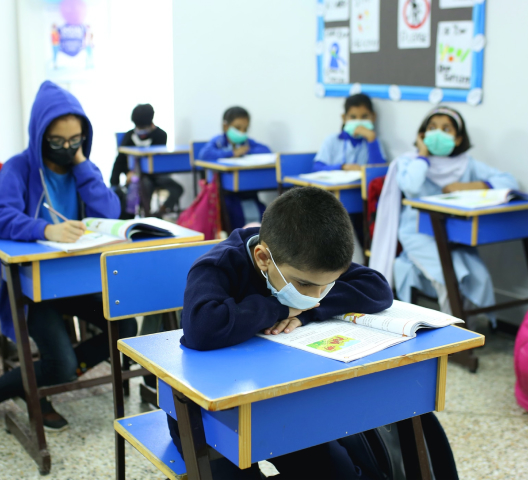
- All students, employees, and visitors must wear a mask. At this time, masks are not required to be worn outside. It is recommended that students bring multiple clean masks to school each day.
- It is recommended to maintain at least 3 feet between students; 6 feet between students who are exercising, singing, or playing a musical instrument; and 6 feet between adults and students. While outdoors, distance should be increased as much as activity and space allow.
- Students will be required to wash or sanitize their hands frequently during the day. Minimally, this includes each time they board a bus, enter a room, and go outside for recess, and before they eat. All building entry points, classrooms, cafeterias, and buses have hand sanitizer dispensers to promote and support this requirement.
- Throughout the day, custodial staff will disinfect high-touch surfaces. At night, custodial staff will clean and disinfect classrooms and other spaces that were in use during the day.
- Any student or employee who develops COVID-19-like symptoms at school or work will be excluded from school or work and referred to a healthcare provider to see if COVID-19 testing is warranted.

Are you worried about risks as schools and camps reopen?
As vaccines become readily available for younger children, parents are optimistic.
August | 2021“Make sure you practice social distancing, always wash your hands, always have hand sanitizer with you, and always wear masks.”
Parents spent the past year and a half making sure they did all they could to protect their children from the COVID-19 pandemic. Now, they face another challenge as schools and after-school programs plan to reopen in the upcoming school year.
According to the CDC, more than 158.2 million Americans--47.7% of the population--have been fully vaccinated. Having said that, things are starting to slowly go back to “normal.” However, the world seems to split among those who cannot wait to get back to “normal” and those who remain anxious and worried about returning to life as we knew it. Parents continue to hear mixed messages from public health officials. Emily Oster, a professor of economics at Brown, explains, “I think parents are excited about some return to normalcy but also finding everything very confusing. The messaging around kids is really split between ‘they are low risk’ and ‘they’re unvaccinated so you still can’t do anything.’” She also states that COVID-19 risks for children are small, and the risk will fall further as vaccination rates rise.
Everyone lived on extra-heightened alert for over a year, and most parents will likely stay on guard until their children are vaccinated. As vaccines become readily available for younger children, parents are optimistic.
The challenge parents face, however, has been further complicated by the spread of the Delta Variant, which health experts are taking very seriously.
According to Yale Medicine,
- Delta is more contagious than other virus strains.
- The World Health Organization (WHO) has called this version of the virus “the fastest and fittest.”
- The first Delta case was identified in December 2020, and the strain spread rapidly, soon becoming the dominant strain of the virus in both India and then Great Britain. Toward the end of June, Delta had already made up more than 20% of cases in the U.S., according to CDC.
- Unvaccinated people are at risk.
- People who have not been fully vaccinated against COVID-19 are most at risk.
- In the U.S., there is a disproportionate number of unvaccinated people in Southern and Appalachian states including Alabama, Arkansas, Georgia, Mississippi, and West Virginia, where vaccination rates are low.
- Delta could lead to “hyperlocal outbreaks.”
- In some cases, a low-vaccination town that is surrounded by high vaccination areas could end up with the virus contained within its borders, and the result could be “hyperlocal outbreaks.”
- Some experts say the U.S. is in a good position because of its relatively high vaccination rates--or that conquering Delta will take a race between vaccination rates and the variant.
- There is still more to learn about Delta.
- It’s unclear whether Delta could cause more breakthrough infections in people who have been vaccinated or have natural immunity from a prior COVID-19 infection.
- Vaccination is the best protection against Delta.
- The most important thing you can do to protect yourself from Delta is to get fully vaccinated, doctors say.

5 Signs Your Child Needs a Tutor
Do you ever wonder when it is appropriate to look for outside help?
November | 2021As the new school year quickly approaches, your child will have more things to juggle in their schedules--whether it is because of an increase in study materials or extracurricular activities.
Be on the lookout for the following factors before looking for a tutor
- Drastic Grade Drop
- If you have noticed a gradual/sudden decrease in your child’s test scores or overall grades in general, make sure to communicate with your child’s teachers. The teacher will point out specific subjects or concepts your child is struggling with.
- Time Management
- As your child goes up in grade levels, the workload will also increase. If you have noticed your child procrastinating on major projects and other homework assignments, she will not be able to keep up with all of the expected workloads.
-
- Consistently Confused/Lacking Confidence
- Sometimes, your child may be underperforming simply because she does not understand the material. If you notice your child being consistently confused with school materials, she may not be keeping up with grade-level expectations. Oftentimes, this will lead to your child losing confidence.
- Decrease in Parental Supervision
- As Covid-19 vaccines become more readily available throughout the U.S., many parents are expected to go back into office buildings for work; thus, you may not have the time to constantly check up on your child’s work or well-being.
- Learning Disabilities
- Children who have been diagnosed with learning disorders such as autism, dyslexia, or ADHD can benefit from tutoring sessions because there are many tutors out there who are experienced in teaching children with learning disabilities.
If you are frustrated watching your child struggle, it’s time to call 703-356-3141. SpiderSmart would be delighted to arrange a FREE VIRTUAL DIAGNOSTIC consultation where we can assess and discuss your child’s needs.
Get your child ready for the upcoming school year with SpiderSmart’s various programs NOW!

The Importance of Literacy
Did you know that literacy skills are developed at an early age?
July | 2021Most people think of literacy simply as the ability to read and write.
However, literacy skills are so much more than simple reading and writing or having a big vocabulary. Literacy skills are used every single day. From understanding a joke to writing a book, literacy skills make our lives rich and meaningful.
Did you know that literacy skills are developed at an early age? Research shows that children who are introduced to reading at a young age demonstrate better learning skills and are more prepared to learn when they begin their formal education.
Instilling a love for reading at an early age is one of the best investments for school success. Learning to read opens the mind of a young child to an incredible world of knowledge and imagination, and it helps them develop creativity and critical thinking skills. As a parent, if you want students to start enjoying learning, it’s crucial to get your student reading from an early age even if it is not the easiest thing to do.
You can help develop literacy skills together with your child! Make fun activities with reading. Try not to watch so much television, but instead, have a “reading night.” You can read a book as a family. It’s quite simple. All you need is the following: a sofa, some lights, a set of ears, eyes, and most importantly, a good book.
Make sure to be interactive! You can take turns reading a page, a paragraph, or maybe even the whole chapter. At the end of each chapter, make sure to ask questions and summarize the chapter. It’s important to make sure your child retains the information he or she just read.
Read more in this New York Times article about asking yourself which books you truly love

Are You Ready to Send Your Child Back to School?
How does sending a child to school change a family’s risk of contracting Covid-19?
June | 2021It’s been over a year since schools across the United States closed their doors due to the pandemic.
However, as Covid-19 vaccines have become readily available for citizens throughout the United States, some schools have decided to welcome students back for in-person instruction. How does this affect your child and your family’s chance of getting Covid-19? According to the National Bureau of Economic Research, when schools have in-person instruction, families with school-age children have a higher risk of contracting the coronavirus—and the burden of that risk falls heaviest on the lowest-income communities.
Read more about the National Bureau of Economic Research study
Read the CDC’s recommendations for going back to school
Charlotte’s Tip of the Month
What is an Argumentative Essay?
January | 2022The argumentative essay is a genre of writing that requires you to:
- Present a claim on a topic
- Explain, clarify, and illustrate that claim
- Persuade the reader that the claim supported in the essay is valid by:
a. Convincing the reader that the claim is correct
b. Persuading the reader that the claim is worth considering - Support the claim by means of giving evidence using facts, examples, and statistics
- Present counterarguments to the thesis and refute them respectfully and critically.
Key Vocabulary
- Argument/claim - An argument states a claim and supports it with reasons and evidence from various sources.
- Counterargument - An argument that stands in opposition to your argument/claim. The counterargument is your opponent’s that tries to explain why you are wrong.
- Refutation - Simply disproving an opposite argument. It is an important skill because it is how a writer successfully convinces the audience of the validity of his/her argument.
How to Write an Argumentative Essay
Stage 1: Choosing a topic and writing the thesis statement.
It is important to note:
- Your topic must be debatable.
- You must have a thesis statement – belief statement.
Topics: Debatable vs. Non-Debatable
- Pollution is bad for the environment. - NON-DEBATABLE
- Cigarette smoke is harmful to people’s health. - NON-DEBATABLE
- At least 25% of the federal budget should be spent on limiting pollution. - DEBATABLE
- The government should impose higher taxes on cigarettes. - DEBATABLE
- A good education is necessary for a successful and happy life - DEBATABLE
What is a Thesis Statement?
A thesis statement is a sentence in which you state your main argument and a brief description of how you will prove it.
Thesis statements do the following:
- Lets the reader know the main idea of the essay.
- Answers the question: “What am I trying to prove to the reader?”
- NOT a factual statement, but a claim that has to be proven throughout the essay.
Concession-Thesis-Reasons Model
Example thesis statement: “Although surveillance cameras may be expensive, schools should install them because they increase safety, reduce vandalism, and keep both teachers and students accountable for their actions.”
- The first part of the statement above is the concession, where you recognize the opposing side’s most important counter-argument: “Although surveillance cameras may be expensive.”
- Next comes the thesis, a simple statement of your main argument: “Schools should install them.”
- Last comes a preview of the reasons that support your argument: “Because they increase safety, reduce vandalism, and keep both teachers and students accountable for their actions.”
It’s important to note that concessions and reasons in the concession-thesis-reasons model can help you build the structure of the following body paragraphs.
Each reason needs to be its own paragraph, so each reason will be strong enough to be considered a “reason.”

Allen (8th Grade)
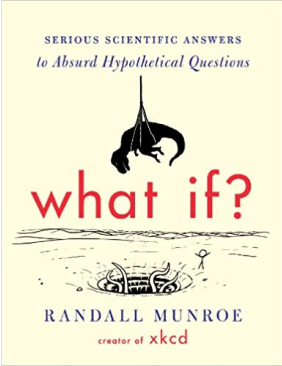
What If? Serious Scientific Answers to Absurd Hypothetical Questions by Randall Munroe is a book packed to the brim with information on many different subjects. It is also one of the most entertaining books I have ever read. “What If?” takes ridiculous scientific questions from the internet and answers them as thoroughly as possible. These are some of the questions:
- What would happen if you made a periodic table out of cube-shaped bricks, where each brick was made out of the corresponding element?
- Is it possible to build a jetpack using downward firing machine guns?
- If every person on Earth aimed a laser pointer at the Moon at the same time, would it change color?
In addition to interesting answers to these questions, Munroe drew cartoons in his signature style to support the humor already in the text.

Overall, What If? is a well-written and entertaining book that inspires a feeling of eagerness to keep reading and a reluctance to finish it.
Bailey (7th Grade)
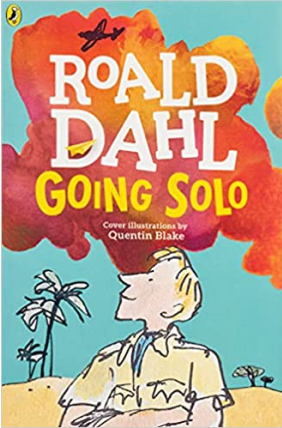
Out of all the SpiderSmart books I've read, my favorite is probably Going Solo by Roald Dahl. This book is an autobiography of Roald Dahl's life when he was a World War II pilot. In the book he goes through many adventures and meets new people. The reason I liked this book so much was because of how interesting it was. After I had finished reading the book, it was one of the few books that stood out to me.
Daniel (6th Grade)
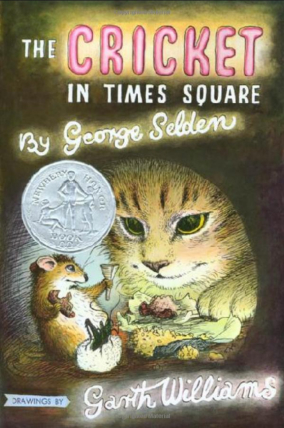
One of my favorite books I read at SpiderSmart was The Cricket in Times Square. The book was about a cricket who accidentally goes into a picnic basket when he was at home in the country. He falls asleep in the picnic basket and finds himself in New York City. There, he's lost and wishes he were home and chirps his song during the evening. A boy named Mario hears the chirps and finds the cricket taking him to the magazine stand Mario and his family worked at. Mario's parents grant Mario permission for Mario to temporarily have the cricket as a pet. Mario treats the cricket very well giving the cricket a small cozy bed and a pillow for it to sleep in. One evening, a Rat named Chester and a Cat named Tucker come and find Cricket. The two new animals politely introduce themselves to the cricket, and the trio of animals become great friends! For about three seasons, the animals have fun singing, eating together, and enjoying the city life.
However, one day, Cricket realizes where he really belongs: his home in the country. He suddenly feels he must go back home. He misses it so much and decides to tell Tucker and Chester about his wish when they would come in the evening. Chester and Tucker are sad about this but decide to stay positive, and they decide to throw the cricket a yummy banquet before going back home. The next morning, Chester and Tucker send the cricket to the train in New York City, sending the cricket back to his home in the country. "Goodbye Cricket!" Chester and Tucker say.
Elly (2nd Grade)
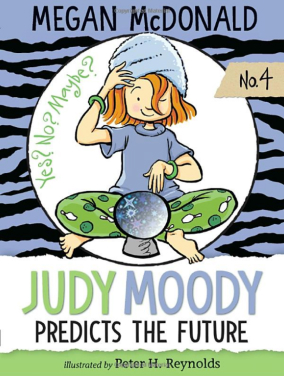
One of my favorite books I read at SpiderSmart was Judy Moody Predicts the Future. I liked that book the most because I loved the story. It also had funny drawings and pictures, and the book had lots of cool superpowers. I also liked the book because there were many parts about schools, and I love school.

Vikhyat (6th Grade)
My favorite book was Chomp by Carl Hiaasen. This book was about Wahoo and Mickey Cray who want to get enough money to pay for their debt. They sign up for a job, and they have to be on television with their least favorite celebrity, Derek Badger, on Expedition Survival! I like this book because it is filled with laughs and a lot of suspense. It is also a real thriller. My favorite part in the book was when there was a boat chase going on. It was really funny because Derek would do so many silly things during that part.


History of My Name
By: Vikhyat Duddilla (Grade 6)
October | 2021 Have you ever wondered who picked your name, or how it was picked? Well I did, and this is the story of it.
My name is Vikhyat Sharma Duddilla. “Vik” and “Viki” are my nicknames. My parents and grandparents chose this name for me. My name means “famous,” and I am happy with it. Are you? My name means famous or renowned in Sanskrit and my name also signifies two Hindu gods, Vishnu and Ganapathi.
When my mother was pregnant, my grandparents told my mom and dad to pick a name out of the Ganesha Sahasranama, which is a book of a thousand names. My grandmother also helped them find my name, and they came to an agreement to name me “Vikhyat.” It has been chosen from one of the Hindu Vedic verses Vishnu Sahasranama, which is rendered as different forms/names of the god Vishnu. Vishnu is the preserver and protector of the universe.
In my religion, “Vikhyat” means famous. It is one of the thousand names of the Hindu god Vishnu, and it is also related to the Hindu god Ganapathi. He is the solver of all problems in Hindu mythology. It means that he is the “Vishwa Vikhyata”, or the world famous. My name in Sanskrit is विख्यात, and in my mother tongue, Telugu, it is విఖ్యాత్.
My nickname is Viki--the shortened version of Vikhyat. I have a couple of nicknames. Like I said, two of them are “Vik” and “Viki.” Some of my best friends call me “Vikpick.” A friend of mine made a nickname for me, which was “Vik Pick The Toothpick.” When I was younger, my parents also called me “Chinnu.” They called me that because it means “little kid” in Telugu.
In conclusion, I like my name because it means famous, and it is a very unique name. The part I like most about my name is that it is related to two Hindu gods. I think that names matter because they show who you are. Names make you unique, because there cannot be the same Matt, or Jack. Everyone has his/her own unique qualities, and I truly believe my name makes me a unique individual

Teaching Reflection

Brian Kim
SpiderSmart Virtual Head Instructor
I immigrated to the U.S. with my family on March 23, 2005, when I was ten years old. Prior to moving to the U.S., I lived in New Zealand from the age of three to five. Thus, I had learned a little English before I arrived in the U.S.
My first day of school in the U.S. is a day I will never forget since it truly was one of the most terrifying and unforgettable experiences I ever had to endure. I was the only Asian student in my class, and when I first stepped into the classroom, I immediately felt like I was someone who did not belong. I was lonely, and I was neglected by everyone around me. Because I did not know English well, no one in my class approached me.
Thinking back, the thing that shocked me most was my homeroom teacher. She clearly was not interested in getting to know me, and she did not care about whether I assimilated into the class or not. On my first day of school, my classmates were assigned to work on a group project. Because I did not know how to talk to these people, my teacher handed me a sheet of paper along with some crayons, and she simply pointed to the corner. No smile, no expression. I was a very competitive and competent student in South Korea, and I really did not appreciate the fact that my teacher was neglecting me. It hurt my pride and made me question my identity. I was ashamed to be Korean, and I was ashamed that I was not an American. After school, when I told my mother about my first day, she hugged me for hours and cried. She told me in order to “survive” as a foreigner in the United States, I needed to step up and study hard. From then on, I studied day and night, striving to learn English. During that process however, I became more and more ashamed of being Korean, and my biggest goal was to completely become an American.
After my first day, I transferred to a private elementary school. There, I was one of the very few Asian students–none were Korean. Because of the school’s demographics, I did not have any Asian friends. I only had white friends. I began to lose interest in Korean culture, but that’s when my mom stepped in. Every day, she emphasized the importance of maintaining my native identity, and she practically forced me to continue practicing Korean. At a young age, I had a hard time understanding why she was pushing so hard for me to maintain our Korean culture within ourselves. Thinking about it now, I am forever grateful for my mom. She implanted the importance of being a multicultural human being living in America in my heart and soul.
I’ve always had a love for learning languages. My wife is an international student from China, and when we were dating in college, I made it a goal to learn Chinese. She was studying in a completely different country, and I wanted to make her feel at home at least a little bit. When our relationship began to get more serious, she made it clear that she wanted to go back to China at least for a little while. Even though it may have sounded like she forced me into learning the language, I truly enjoyed learning the language itself. The grammatical concepts, the different tones, and various dialects not only made sense, but they also fascinated me.
My goal as an ESL teacher is not to simply teach English. I want to become a teacher that can label ESL as a celebration of different languages and cultures. I want to invest myself in every single student as a different individual, and I want to become an advocate for each and every student. The past two years have been truly different years. The way I learned and practiced English back in 2005 is completely different from how students learn in 2022. Thus, throughout my teaching career, I hope to learn more up-to-date methods of teaching that can truly benefit my students.

How to Help Your Child Develop Critical Thinking Skills

Breaking Tasks into Pieces: The Pomodoro Technique
Learn how to properly manage time
July | 2021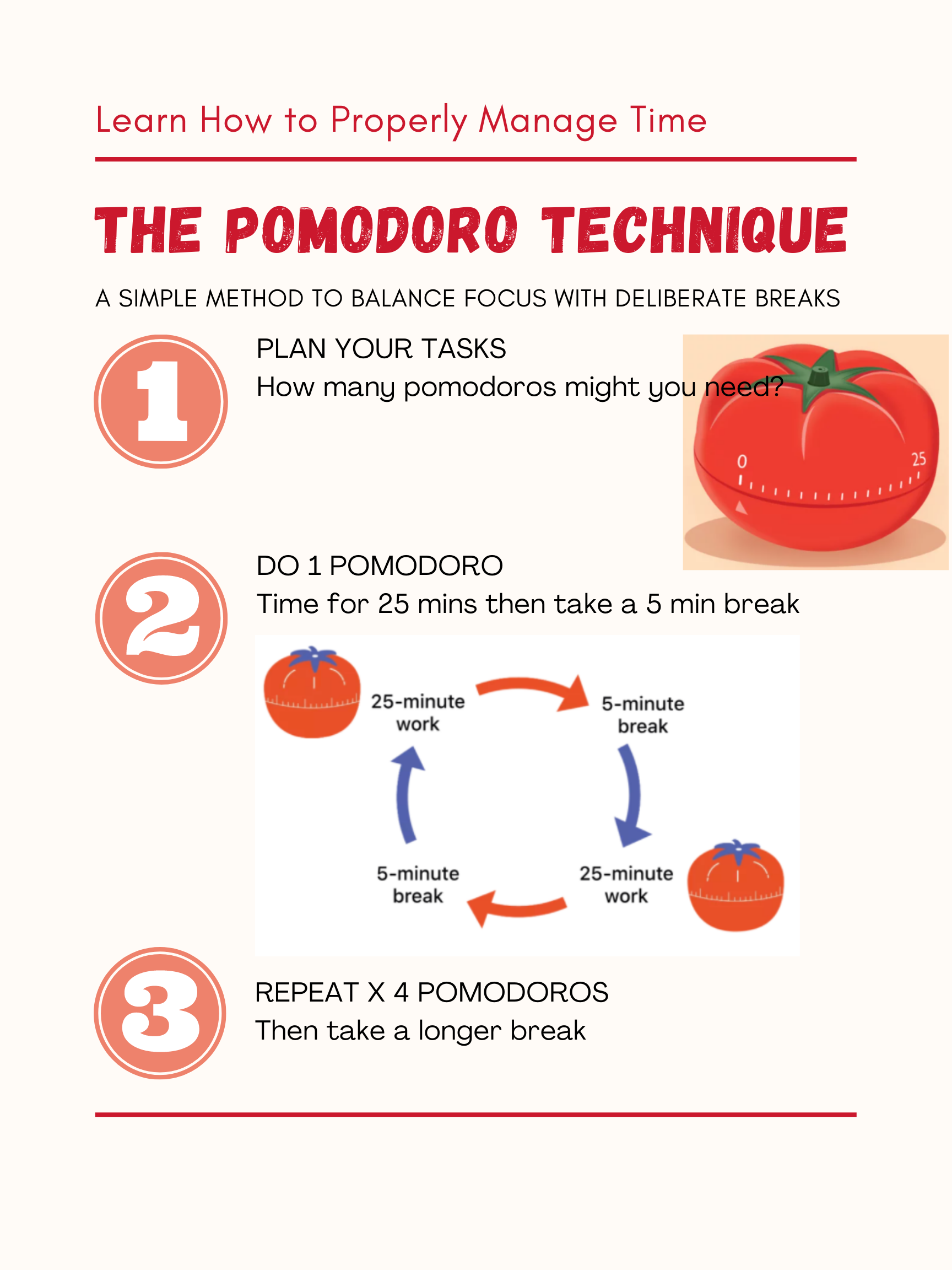
In the 1980s, an entrepreneurial college student named Francesco Cirillo came up with a time management method he called the Pomodoro Technique. The name comes from the Italian word for “tomato,” which is the shape of a once popular kitchen timer in his native Italy.
The gist of Cirillo’s technique is to use the timer for 25-minute intervals of concentrated work, followed by a five-minute break, and then take a longer break after you do a string of four short tomato bursts.
The most effective way to become more organized is to establish a routine. A routine starts with something very basic such as when you wake up, immediately go brush your teeth, drink some water, and take some vitamins. Other examples include opening your planner/calendar and estimating how long homework will take you once you get home from school.
Ask yourself about your academic workload. How much time do you spend on homework each night? Good study habits happen because students have predetermined start and stop times. If you are consistently doing homework past 10pm, that usually indicates poor time management.
A great technique for establishing effective study skills is using the Pomodoro Technique. This technique is about setting defined start and stop times for work and breaks. A common setup is to work for 25 minutes and then take a 5 minute break. The philosophy is to work for time periods and not work “until you finish.” In this manner, you feel like you have accomplished your task because you worked for 25 minutes. Make sure that when you are working, you are ONLY focused on the task at hand. Put away your phone and place it out of reach. The 5-minute break can be used to check your phone. The time periods can be flexible such as 50 minutes working with a 10-minute break. The idea is to make sure it’s structured.
Read this Forbes article explaining more about the Pomodoro Technique

How to Help Your Child Develop Critical Thinking Skills
Four ways to challenge your kids to think critically
June | 2021- Don't just ask "what?" — ask "how?" and "why?"
- Follow it up with "how do you know this?"
- Prompt them to think about how their perspective may differ from other people's.
- Finally, ask them how to solve the problem.
Meet Our Instructors

Leonard Bumbaca
Math and History Tutor
Leonard Bumbaca, affectionately known by everyone as Mr. B, has been a part of the SpiderSmart family for over 25 years. He started when he was student teaching, after finishing a career in the Navy. As he moved in his teaching career, working at Fairfax County Public Schools, he continued to teach a mixture of subjects to many students at SpiderSmart over the years--enjoying tremendously each and every unique experience!
Now a retired teacher, Mr. B keeps busy working as a substitute teacher, helping with elections, and continuing to teach new generations of students at SpiderSmart.
When he’s not working, he spends time solving math puzzles, reading history, travelling to faraway places like Iceland, and walking daily. At home in Annandale Virginia, he enjoys free time with his wife, his son, and two cats who think they run the house.
Mr. B always believes that there are many doors to an answer, and he gets excited when a student thinks differently and finds a new one. With the move to virtual learning, he set out to prove that an old-timer can master this “Zoom thing.” He enjoys both virtual and in-person learning equally.
Looking ahead, Mr. B is very excited about the new changes no one has even thought about. Each year (especially the past one) has brought challenges and opportunities. SpiderSmart as a place of learning has changed with every new innovation. Gone: floppy disks and paper-only resources. In: the improved internet of the 21st century and the many new apps. It has been exciting to be a part of these changes, but the one thing that has remained constant throughout Mr. B’s time at SpiderSmart has been the 100 percent dedication to the needs of the students. It’s an honor to be a part of such a caring and success-driven culture

Jason Ellison
Director of Curriculum Development
Jason has been with SpiderSmart before it was SpiderSmart. In the beginning, it was The Reading & Writing Center based in one office in Annandale, Virginia. As a graduate student, Jason worked part time tutoring students and handling the long-distance students that mailed in handwritten worksheets to which he responded with written feedback. Yes, there was no Internet and there were no web sites (or tablets or laptops), and everything students and teachers wrote was on paper. Assignments and answer keys were kept in folders in a filing cabinet, and there was only the one Reading & Writing program.
As the years passed and he graduated with an MFA in Creative Writing in 1994, Jason stayed with what became SpiderSmart, sitting in on the meetings focused on the development of the company’s first website interface for students and teachers and developing new assignments, while also teaching part time at Northern Virginia Community College and George Mason University. More SpiderSmart Learning Centers opened in the DC Metro area and then expanded into other sites around the country, and new programs such as Math and Test Prep were added to SpiderSmart’s offerings.
Jason took over all the online eLearning students and began working full time for SpiderSmart developing assignments, creating promotional materials, responding to Directors’ needs, making a monthly What’s New newsletter, and eventually handling all the diagnostic testing for new online students.
At this point, Jason has read thousands of pieces of children’s literature over the decades and taught thousands of students. He lives in the Appalachian mountains in Asheville, North Carolina, with his polyglot wife Madeleine, son Sebastian, their sly cat Kabuki, and a rather opinionated African Gray parrot named Dora.
Brian Kim
SpiderSmart Virtual Head Instructor
Welcome to SpiderSmart. I’m one of the head instructors for SpiderSmart Virtual, our online tutoring program. I’m excited to be your child’s teacher this year! It’s going to be a great year full of learning and fun! Here’s a little bit about me.
I was born in South Korea, and I’ve lived in the United States for more than 15 years. I graduated with my bachelor’s degree in International Affairs and Political Science from the University of Georgia. I’ll be pursuing my master’s degree in English as a Second Language from the University of Virginia this fall. I have been a part of the SpiderSmart family for over a year.
I have a keen understanding of the challenges students from kindergarten to high school face, particularly those who have learned or are learning English as a second language. This knowledge comes from my own personal experience: I myself am a former ESL student who was schooled in different methodologies, from rote memorization to more functional/communicative approaches. I’ve experienced firsthand the strengths and weaknesses of these different approaches and use this knowledge to best fit the needs of each child I tutor.
One of my goals this coming school year is help students improve their reading and writing skills. Your child will join the virtual Zoom session for a one-on-one tutoring session for 30 minutes. We will focus on vocabulary, reading comprehension, and essay writing. During my sessions, I expect all students to speak English as much as possible and be respectful.
I like to work closely together with parents, and I believe frequent communication is vital. You can always contact me through email. My email address is spidersmartbk@gmail.com. I will try to reply to all emails within 24 hours.
I look forward to having a wonderful session with your child!
Proven Effective Since 1989
Read, Write, Achieve!
At SpiderSmart, students become confident thinkers and learners. Get Started Nowor Call Us: 833.492.0121