
That harsh voice in your head?
"I'm not doing enough."
"They'll fall behind."
"I'm failing them."
That voice isn't protecting you — it's running your homeschool!

If You're Drowning in Doubts & Triggers
- You snap at your kids, then feel guilty for the rest of the day
- Anxious thoughts spiral: "What if they can't get into college? What if I'm ruining their future?"
- Your child ignores your request and you feel your anger rising, but you don't know how to respond without losing it
- You lie awake at night replaying every moment you "failed" as a homeschool mom
Here's the thing: these aren't just feelings. They're what happens when that critical inner voice takes over and starts attacking WHO YOU ARE instead of just describing what's happening.
The problem is that no one taught you how to recognize when normal frustration crosses into harsh self-criticism. So that negative inner voice runs the show instead of you.
One small tool. A lot less noise in your head.
Here's What I've Learned After 20 Years of Homeschooling
I discovered that the most important help I needed wasn't finding the perfect curriculum or resources.
It was learning how to show up—how to manage my big emotions, my triggers, my frustrations, and my doubts.
Our emotions, triggers, frustrations, doubts, and uncertainties originate from our thoughts. And when we learn to address our thoughts, everything changes.
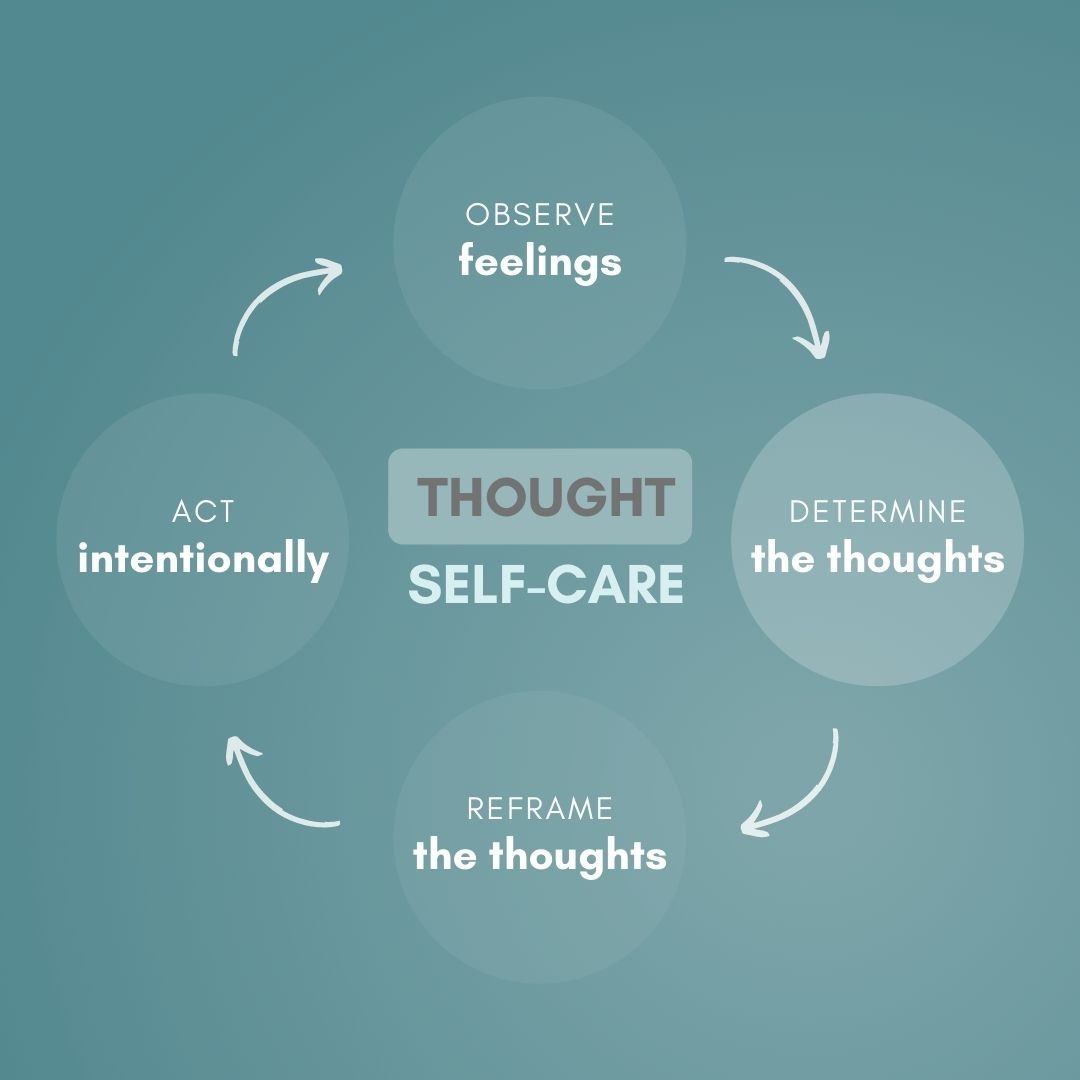
That's why I created the Thought Care Checklist—a simple, practical framework to help you acknowledge your feelings, examine the thoughts behind them, and choose how you show up in your homeschool.
When Do You Actually Need This Checklist?
Not every hard homeschool moment needs thought work. Sometimes you just need rest, practical help, or a different curriculum.
But when your thoughts cross from:
- "This is hard" → "I'm bad at this"
- "I made a mistake" → "I always mess up"
- "I'm tired" → "I'm lazy"
- "This isn't working" → "I'm failing them"
That's when you need the Thought Care Checklist—to interrupt the self-attack before it spirals.
The 4-Step Thought Care Process
This isn't about toxic positivity or pretending you don't feel what you feel. It's about learning to pause before that critical voice takes over — and choosing how you show up instead.
1. Observe Your Feelings You'll learn to sit with what you're feeling without immediately judging it. This one shift alone can stop a spiral before it starts.
2. Trace It to the Thought Feelings don't appear out of nowhere. You'll learn to find the exact thought driving them — which is the only way to actually change anything.
3. Challenge the Story That thought you're believing? It might not be true. You'll learn a simple way to question it — and find a thought that's more honest and a lot less cruel.
4. Choose How You Show Up From that grounded place, you get to decide how you respond to your kids, your day, your doubts. On purpose. Not on autopilot.
The checklist walks you through all four steps — in plain language, in the moment you need it most.

What's at Stake?
Without This Framework:
- That critical voice will keep telling you you're not enough
- You'll spiral every time something goes wrong
- The harsh self-talk will steal your joy
- Your kids will absorb your self-doubt
With Thought Care in Place:
- You'll catch that harsh inner voice before it spirals
- You'll know the difference between being tired and being mean to yourself
- You'll stop beating yourself up for being human
- You'll model emotional intelligence for your children
Get Your Free Thought Care Checklist
Start creating boundaries for your mind so you can show up intentionally in your homeschool—today.
It's free. It takes 5 minutes. And it might change how you talk to yourself today.