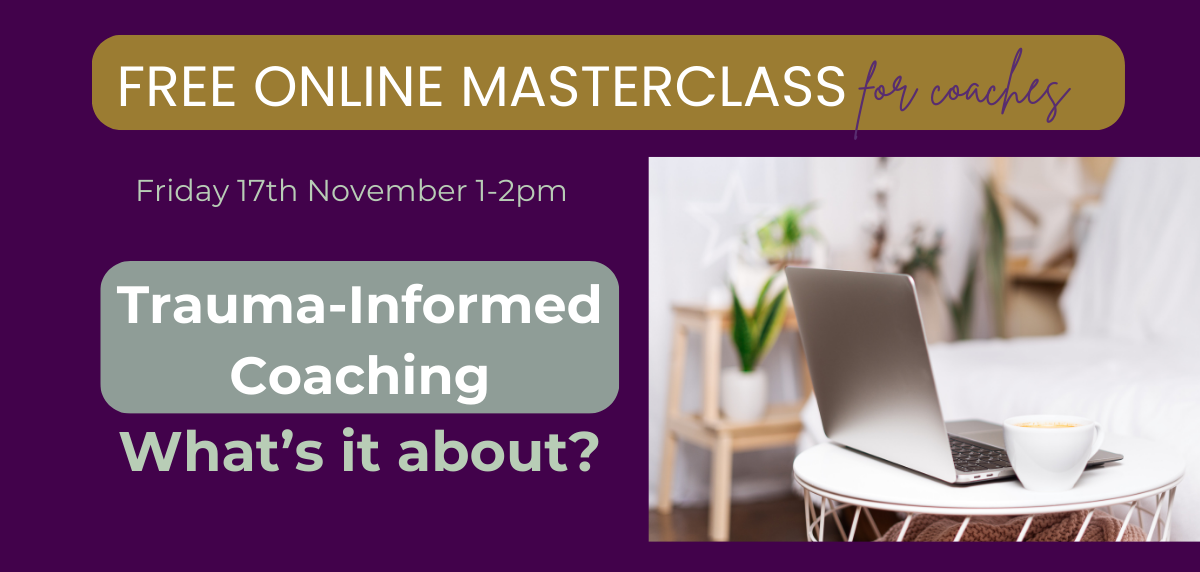
An invitation for coaches and NLP Practitioners who'd like to know more!
Join me for this FREE online Masterclass where we will explore
💭 Has being trauma-informed got a place in coaching?
💭 What is trauma and how might it impact my client today?
💭 What being trauma-informed looks like in our coaching business.
Sign up below to save your spot on
Friday 17th November 2023 @ 1-2pm
Some common statements when being trauma-informed as a coach is first introduced include
'How would being trauma-informed help me as a coach?'
'The word trauma sounds pretty heavy, I just stay away from that stuff'
'I am not a therapist, why is it relevant?'
The words trauma and coaching in the same sentence can be a polarising topic.
Some of this can be due to a misunderstanding around what trauma is, how it occurs and how it shows up.
The reality is trauma is already all around us. It's impacts our thoughts, emotions, beliefs and how we relate to others. We all lived through a pandemic and may have already noticed how it impacted each person differently.
As coaches, we often pick up on our clients thought patterns and beliefs. When we recognise that our clients may have trauma in their past, like 50-60% of us do, being trauma-informed in our work may well be nudged into our awareness.
Another misconception can be what a trauma-informed approach means and involves.
As coaches, having an understanding of trauma, how it impacts us and what being trauma-informed means helps us to develop and grow, both professionally and personally.
An invitation for coaches and NLP Practitioners who'd like to know more!
Join me for this FREE online Masterclass where we will explore
💭 Has being trauma-informed got a place in coaching?
💭 What is trauma and how might it impact my client today?
💭 What being trauma-informed looks like in our coaching business.
Sign up below to save your spot on
Friday 17th November 2023 @ 1-2pm
If you can't make the LIVE session:
Once registered you will receive a recording which you can access for one week after the webinar. If you have any questions you'd like to have asked, reply with your question to your registration email before the 16/11/23.
The session will be held online via Zoom. You will be sent a zoom link to your inbox.